With this short piece, I’m launching a series of stories about life in a village in Mali, where I worked off an on for a period of about 8 years, establishing a small evangelism/ church planting team that continues to share Jesus with the local population. My hope is that you will be inspired and encouraged to be the ‘Word made flesh’ wherever you find yourself in this world.
An be nyongonfe (We’re together!)
Matthew 28:16-20
I love this final scene in Matthew’s Gospel. It so clearly defines our mission as followers of Jesus, and it is simple – so simple, in fact, that it’s easy to overlook the key elements of Jesus’ charge to his disciples, and to end up doing everything but what He said to do, in an effort to fill our churches and achieve results. We can end up accomplishing ‘great things’ that have nothing to do with the actual mission. And what is that mission exactly?
• Go into the world (not attempt to fit the world into a building).
• Make disciples of all nations (enthicities or people groups). A disciple is simply a learner, a follower, or more practically, an apprentice.
• Baptize them ‘in the name of the Father, Son and Holy Spirit. (Name speaks to identity – invite people into this divine family where they receive a new identity. In baptism, people are identifying with the family of God into which they’ve been born anew by faith).
• Teach them to obey everything Jesus has commanded. This is where it gets intensely practical, where it becomes an apprenticeship. In other words, ‘don’t just tell, but show them how to do it.’ Show them HOW to follow Jesus in this world.
For this mission, we have the assurance of Jesus ultimate authority in every realm, and the promise of His empowering, accompanying presence all of the time. But this master plan depends on a partnership between the human and the divine. I’m all about the divine, the supernatural, the ‘God-side’ of this thing. Woohoo! Bring on the miracles! But none of it works without the human element. Yes, fallible, frail, ridiculous, annoying, ordinary people. I’m one of them. Apparently, what Jesus had in mind would involve, real, raw, life-on-life human relationships. People showing other people how to follow Jesus, ordinary people showing other ordinary people what it looks like to walk with God in this world. Think about this with me. Think about the disciples in this scene in Matthew.
They have all just come through the harrowing events of Jesus’ arrest, trial, crucifixion, and glorious resurrection. When you read the Gospel accounts of those events, you realize that none of these men had been star performers. As a matter of fact, during his arrest, “they all left him and fled.” Now here they are, reassembled with the exception of Judas, worshipping the risen Christ, but even now ‘some of them doubted.’ Jesus is about to leave planet earth, and He commits the future of THE mission – the one thing for which He came to earth, lived, suffered, died and rose again – to this group of average people.
When you read the continuing story in the book of Acts, the success of this group is amazing, given their humble beginnings. Of course there is the divine element – the power, presence and guidance of the Holy Spirit. Miracles. A sense of awe. God present among His people. But is that the whole story? We also see community, family, and deep friendships. And without these, the mission does not move forward – at least, not the mission that Jesus entrusted to his disciples.
In most studies I’ve read about Jesus’ training of the disciples, there is one simple but powerful aspect that gets overlooked: friendship. Jesus took a diverse, difficult collection of individuals and formed them into a tightknit group of friends. Jesus modeled it. He formed friendships with the disciples and others, like Martha, Mary and Lazarus. He nurtured and encouraged the friendships they formed with one another. At the end He said, ‘I no longer call you servants, but friends.’ He urged them as strongly as He could to love one another, to remain committed to one another. And they did. The disciples and their tribe continued to live, model and reproduce this way of life. And that was the strength of the early church – a network of friendships that couldn’t be broken. It was not buildings, and programs, and branding, and institutions, and slick productions that wowed audiences. None of those things will change a single life, no matter how great the experience. What we need is the raw, real sharing of one life with another. Inviting someone to eat with you, to walk with you, to know you, to watch how you follow Jesus, how you do life, even when it’s not perfect. Even a casual reading of the New Testament letters will tell you it was pretty messy – diverse groups of people from various backgrounds, races and social strata learning to follow Jesus, and learning to do it together in community. Conflicts, friendships, controversies, and God in the middle of it all working in and through the lives of flawed human beings, not much different from us. Can we bring back the human element? Can we bring back friendship? I sure hope so.
As a young person, I didn’t understand this very well – the fact that I am dust, that I am impossibly frail and fragile, and broken, and that my life is susceptible in a thousand ways to crumbling and coming undone. Like most young people, I felt invincible – all 120 pounds of me. That’s why I could set off on a 40-mile journey, on foot, through the forests of central Congo, with a light backpack holding my Lingala Bible, a notebook and a few clothes. No food, no flashlight or anything else one might deem prudent – if not necessary – for such a trek.
A long journey on foot
I wasn’t big on breakfast in those days, so I only picked at the hearty meal of chicken and rice that Pastor Omanyundu encouraged me to eat before we started out that morning. After 6 hours or more of crossing open grassland, descending into thickly forested valleys, fording small streams (from which I drank desperately without caring about water quality) and climbing out again to cross more grassland, I regretted not filling my belly when I’d had the chance. When passing through villages, which were few and far between on that route, people would exclaim in surprise upon seeing the one white face among the four travelers, “Eh!! Mundele wana akokoka to!? (What!? Is that white man gonna make it?). I took that as a challenge; I had to prove that yes, I could make it. After thirteen and a half hours of walking with only a few short breaks, no longer than 10 minutes each, we did make it, all of us bone-weary and too tired to care if we ate, while our host caught a chicken and hastily prepared a meal. We spent the next two and half days teaching a seminar for a small church that you’d never find on a map, and started the journey back home after a Sunday morning meeting and a good meal. People actually congratulated me – “Eeeeh mundele, oza’makasi, okomi!” White man, you’re strong, you made it! – as we passed through those few villages on the return trip. That adventure definitely won me some ‘street cred’ among the locals and some respect among our churches.
That was over thirty years ago. These days, It’s rare that I feel the need to prove anything. I’m much more reconciled to the fact that yes, I am dust, I am fragile, and that apart from God’s sustaining grace I could easily come undone in any number of ways. Living into my sixties has helped me acknowledge these facts, and living with an incurable blood cancer for the last 12 of these 66 years is a daily reminder. This is not a gloomy, negative thing. It’s a humbling, freeing thing – a reckoning with the reality of my humanity and God’s mercy. It’s not one or the other but both/and. This is what the season of Lent is all about, at least in part.
Lent begins with Ash Wednesday. Ashes smeared on one’s forehead. Dust. If we think of it in the light of Genesis chapter three, it’s a poignant reminder of Adam’s sin, our mortality, and the glorious, only hope we have because of Jesus’ victory over both. As pastor and author Rich Villodas says, “Ash Wednesday is not a day to manufacture guilt. It’s a day to recognize our brokenness, frailty, and trust in God’s love. It’s a day to freely come before God and declare, ‘I am human, I am dust, and I am loved.”
This is a season to press in to the reality of our utter dependence on Christ. Whether or not you observe this literal forty day period or not, we all need Lenten seasons in our walk with God – especially in these days when so much of Western Christianity has rejected the idea of being sheep in favor being roaring lions who crush their opponents with political strength and superiority. The entire New Testament refers to followers of Jesus as sheep, as God’s flock. “Do not be afraid little flock, for your Father has been pleased to give you the Kindgom.” (Luke 12:32). This is not a temporary, earthly victory won by human means, but an eternal Kingdom. To be sure, Jesus is called “The Lion of the tribe of Judah,” but when the apostle John turns to look at this conquering Lion seated on the throne of the universe (Revelation 5:5-6) what he sees is a slain Lamb. This vision was intended to say something powerful and encouraging to believers who were living in a hostile, threatening political environment, often persecuted and marginalized. God’s power is demonstrated through the weak who trust in Him rather than in their own strength and power. Jesus told Peter to put away his sword – and ultimate victory came through surrender.
This is a season, a blessed opportunity, to humble ourselves, to realign ourselves with eternal realities, with Jesus the Lamb of God. Humility is such a hopeful thing because “God resists the proud but gives grace to the humble.” (James 4:6). Consider these words from the prophet Isaiah:
“For this is what the high and exalted One says—
he who lives forever, whose name is holy:
“I live in a high and holy place,
but also with the one who is contrite and lowly in spirit,
to revive the spirit of the lowly
and to revive the heart of the contrite.” (Isaiah 57:15).
The Lord knows what we are made of, He remembers that we are dust. When we remember it, that dust becomes the fertile soil for His mercy, and beautiful things will result. One day, our dust will turn to glory.
So in Christ Jesus you are all children of God through faith, for all of you who were baptized into Christ have clothed yourselves with Christ. There is neither Jew nor Gentile, neither slave nor free, nor is there male and female, for you are all one in Christ Jesus. (Galatians 3:26-28).
Here there is no Gentile or Jew, circumcised or uncircumcised, barbarian, Scythian, slave or free, but Christ is all, and is in all. (Colossians 3:11).
If you’re an honest reader of the New Testament, and if you make an effort to come to the Scriptures with a pair of fresh eyes each time, you will notice that issues of race and racial reconciliation are at the heart of the Gospel and it’s call that we all be reconciled to God through Jesus. If you were a first century Jew or Gentile, even a casual reading of the Gospel accounts of Matthew, Mark, Luke or John would have shocked you and made you either outraged or delighted. There is nothing timid or hesitant about the way that Jesus, and then New Testament authors inspired by the Holy Spirit himself, marched unapologetically into territory that the evangelical church of our day has carefully tiptoed around – or tried to downplay.
There’s a simple reason for this bold approach: from the beginning of the big story of redemption, God’s stated intention was to bless “all peoples (races or ethnic groups) on earth” with salvation (Genesis 12:3). Racial inequality, mutual mistrust, bigotry and prejudice are so obviously at odds with God’s will for the world, which has been clearly stated from Genesis to Revelation, that these issues must be dealt with boldly – and we know this. But so often, the white evangelical response to issues of race has been, “race doesn’t matter,” “it’s not about race,” or simply to deny there’s a problem. We don’t like to be made uncomfortable. Just check with your elders and ask them what most of the white Evangelical, Protestant, or even Pentecostal churches did during the civil rights movement of the sixties. That might be an uncomfortable conversation, because the sad truth is that the majority sat primly on the sidelines with their hands folded and waited to see the outcome. Now, from a safe historical distance we can praise the sacrifices of Dr. Martin Luther King, John Lewis and other civil rights leaders of that time who put their lives on the line. But so I don’t veer off track voicing my own opinions and thoughts, let’s take a look at the Biblcial record.
We might as well start with Matthew’s gospel which, according to many Bible scholars, was written to appeal to the Jewish nation and to present Jesus as “the King of the Jews.” Before Matthew even gets into the story, however, he includes some details about Jesus’ family lineage that boldly confront attitudes of racial – and even gender – discrimination, details which are deliberately placed to present Jesus as the Savior for all peoples and races. In the first six verses, four women are named and given a place of honor in the line of Christ. Three of them come from outside the Jewish race:
– Tamar, a Canaanite woman who had been abused and then neglected by the men in her life, and who took some bold (and morally questionable) action, to preserve the family line from which Jesus comes.
– Rahab, a Canaanite prostitue who responded in faith to the God of Israel and took a significant risk to cooperate with His plan.
– Ruth, a moabite woman who immigrated to the land of Israel and became the great-grandmother of King David.
The fact that women were included in such a genealogy, which traditionally listed only fathers, would have raised eyebrows all by itself. But the fact that three out of the four came from outside the Jewish race makes a pointed statement and confronts nationalistic pride and prejudice head-on. In the very next chapter which details Jesus’ birth and earliest years, who is it but complete foreigners “from the East” who come looking for the “King of the Jews?” And these foreigners are among the first to bow down and worship Him.
It gets even better. When Jesus begins his public ministry, as Luke records it, He has some amazing good news for the poor, the oppressed and the humble, as well as some words that infuriated those who were stuck in their pride of race and nationality:
“Truly I tell you,” he continued, “no prophet is accepted in his hometown. I assure you that there were many widows in Israel in Elijah’s time, when the sky was shut for three and a half years and there was a severe famine throughout the land. Yet Elijah was not sent to any of them, but to a widow in Zarephath in the region of Sidon. And there were many in Israel with leprosy in the time of Elisha the prophet, yet not one of them was cleansed—only Naaman the Syrian.” (Luke 4:24-27).
The crowd in this small-town synagogue did not welcome the suggestion that maybe they didn’t have “most favored nation” status with God, and that the Lord had chosen instead to favor despised, undeserving gentiles with miracles of mercy. Not only did they not like it, here’s how they reacted:
“All the people in the synagogue were furious when they heard this. They got up, drove him [Jesus] out of the town, and took him to the brow of the hill on which the town was built, in order to throw him off the cliff. But he walked right through the crowd and went on his way” (v. 28-30).
Jesus didn’t make up these facts about Elijah or Elisha, or twist and misapply them to get such an extreme reaction. These stories were clearly recorded in Israel’s history, in the books of 1st and 2nd Kings. He was simply applying the antiseptic of truth to the stinking infection of nationalism and racial bigotry, and it stung. Here’s a real-life of example of Hebrews 4:12 which says “The word of God is alive and active. Sharper than any double-edged sword, it penetrates even to dividing soul and spirit, joints and marrow; it judges the thoughts and attitudes of the heart.” But why would Jesus even bother to poke around in this sore spot? In order to “see the Kingdom of God,” as He himself put it – to enter into it and fully participate in it – our blindness must be cured and barriers of racism and bigotry must be shattered, since this is a Kingdom that includes people of every race, tongue and tribe on the face of the earth. It requires a love and a loyalty that far supersede national, cultural and racial boundaries and loyalties.
Jesus chose twelve disciples, with the intention that through them and through those who would follow Him as a result of their testimony, the invitation to enter the Kingdom through repentance and forgiveness would extend to the ends of the earth. It would include all races and cultures. So He began to show them, patiently and mostly through examples and encounters, that God the Father values people of all races and cultures, and that He wasn’t impressed by patriotism and national pride.
In Matthew 8:5-12, a Roman military man – definitely not one of God’s ‘chosen people’ – comes to Jesus seeking healing for his sick servant. This man seems to understand better than most who Jesus is, and Jesus commends his faith, saying, “I have not found anyone in Israel with such great faith.” Jesus then goes on to say that “many will come from the east and the west and take their places at the feast in the kingdom of heaven,” while those who assumed they were guaranteed a spot because of their race and nationality would actually miss out. Can you see how uncomfortable this would have made all those patriotic Israelites in the crowd? Do you see the point Jesus is making here, the foundation he is laying for the Gospel to all peoples and races, with no second-class citizens? He is clearly condemning nationalism and racism, but we have typically glossed over these Gospel accounts and missed the point.
In Matthew 15:21-28, things get even more awkward. Jesus has deliberately withdrawn from Jewish territory, along with his disciples (who still have a lot to learn), into a gentile area where they would have been really uncomfortable. And sure enough, a Canaanite woman recognizes them and approaches Jesus. In his account, Matthew deliberately uses the old-fashioned word “Canaanite” to highlight this woman’s non-Jewish, pagan background and that she was a descendant of Israel’s enemies. She calls Jesus ‘Lord’ and ‘Son of David’. Once again, here is someone from the wrong race who understands Jesus’ identity better than His own people do. And Jesus is about to expose the disciples’ ugly but just-under-the-surface racism to the clear light of day… He appears to ignore the woman completely, but she’s not giving up. She follows Jesus and the disciples and keeps crying out for help. The disciples are getting annoyed that this icky gentile woman won’t leave them alone:
“Lord, send her away because she’s bothering us with all her noise.” So Jesus turns around and says, “I was only sent to the lost sheep of Israel.” The disciples are probably thinking, if not saying under their breath, “Damn straight! You tell her, Lord!”
Now the woman comes and kneels in front of Him. “Lord, help me!” Jesus allows the tension to build. It’s about to get worse.
“It’s not right to take the children’s bread and toss it to the dogs.”
Wait… did Jesus really say that!? At this point the disciples and anyone else around probably froze. This has gone beyond awkward. What is happening here? Jesus is saying out loud, in words everyone can hear, what the disciples were thinking. He is exposing the ugliness of their racism in broad daylight. Hopefully they felt some shame. And maybe – I don’t know – Jesus is winking at the woman to say, ‘just play along with me here.’ The woman rises to the occasion with her witty answer: “OK Lord, but even the ‘dogs’ get the crumbs that fall from the table!”
It is clear that Jesus never viewed her as a gentile dog. He now addresses her with complete respect (the word ‘woman’ was a term of respect like madam, or ma’am). Jesus commends her faith and grants her request. And He probably gave the disciples a long look in the eye. The fact that this incident is recorded in Matthew’s Gospel tells us that it was one of those encounters that marked Jesus’ followers and stayed with them.
There are other striking examples of Jesus crossing racial and social boundaries to interact with individuals who would have been rejected by the ‘good’ religious people of His day, like the Samaritan woman in John chapter four. And then there’s Peter in Acts chapter ten, when the Lord sends him to the home of a gentile named Cornelius who is hungry to know God. It only took a vision, repeated three times, as well as God’s direct voice, to get him to go. And after he goes, the other church leaders are outraged that he actually ate and slept in the home of a gentile… Racism is a stubborn thing. But I’m not writing a Bible commentary and this essay is already getting long, so let me jump ahead to the Apostle Paul’s letter to the Galatians – a group of non-Jewish believers. Paul recounts a confrontation he had with Peter over the issue of racism and the Gospel. Let’s just call it racism in the church.
“When Cephas [ Peter] came to Antioch, I opposed him to his face, because he stood condemned. For before certain men came from James, he used to eat with the Gentiles. But when they arrived, he began to draw back and separate himself from the Gentiles because he was afraid of those who belonged to the circumcision group. The other Jews joined him in his hypocrisy, so that by their hypocrisy even Barnabas was led astray.
When I saw that they were not acting in line with the truth of the gospel, I said to Cephas in front of them all, “You are a Jew, yet you live like a Gentile and not like a Jew. How is it, then, that you force Gentiles to follow Jewish customs?” (Galatians 2:11-14).
At this point in the history of the New Testament church and it’s growth, the Gospel was spreading through the Apostle Paul and others across the Roman Empire. Antioch was the first primarily non-Jewish center of believers in Jesus, and it became a missionary church from which Paul and others were sent out with the Gospel. The believers in Jerusalem and Judaea were culturally Jewish, and still followed many Jewish religious customs. The gentile believers in Antioch did not follow these customs, and were most likely looked down upon by the Jerusalem crowd. At some point, the Apostle Peter spends time in Antioch with Paul and other leaders, teaching the new believers. It’s great, everyone eating together, sharing life in Jesus across racial and cultural barriers – even erasing those barriers. Until some big-wigs from Jerusalem come down to Antioch to check things out… Peter is intimidated, afraid of being judged or criticized, so he begins to act differently. He withdraws from the Gentiles at meals and starts eating only with his old Jewish crowd who are still following their old religious customs. It’s a passive move, he’s trying to avoid conflict. He’s not being aggressively racist, not referring to the Gentile believers as ‘dogs,’ nothing openly offensive like that, and hopefully no jokes at their expense. But his behavior signals that the Gentiles are second-class citizens of whom he’s ashamed, and the Apostle Paul, who has been laying down his life to bring the Good News of Jesus to these people, will have none of it. He confronts Peter to his face in front of eveyone, because this is vitally important. If God plays favorites based on race, culture, and observance of religious laws, then the Gospel isn’t the Gospel anymore. Paul calls out Peter’s racist behavior as not being in line with the truth of the Gospel, and he doesn’t care if it makes some people uncomfortable!
The Good News of Jesus, at its very root, is and must always be anti-racist. It is not silent or passive about this issue. The Aposlte Paul understood this and he wasn’t afraid to confront even a mild expression of racism – because if he let it slide, then the Gospel, the very truth of God, is undermined. And here’s the sad truth: the Gospel of Jesus Christ and its credibility has been undermined repeatedly and continually in America, because we let racism slide in the church and in society as a whole, in the dubious interest of keeping the peace or not offending anyone. The only ones who are not offended when we keep silent are the ones who need to be offended. And how do you think those who continue to suffer the indignities of racism – whether subtle or overt – feel about it when the rest of us stay silent or try to sidestep the issue? And what conclusions might they draw about the track record of the evangelical church?
Here’s a brief excerpt from an article by Justin Taylor from The Gospel Coalition blog:
But it does seem self-evident that, in the main, white evangelicals—particularly those in the South—were deeply invested in efforts to either uphold Jim Crow or to try to slow down its dismantling. While a previous generation of historians suggested this was symptomatic of “cultural captivity,” I’m not so sure. In fact, in many cases, it seems that evangelical theology—or at least distorted models of it—were part of the reason segregationist beliefs and structures took shape the way they did. The unfortunate reality isn’t that evangelical theology in the South was muted when it came to racial justice, it’s that it was actively used to undermine justice and to perpetuate a demonic system. And that’s the cruelest historical irony of it all: those who loved the “old rugged cross” were often also those who torched crosses in protest of desegregation.
As sad as this is, I think it’s even sadder that much of the white evangelical world has never reckoned with its history regarding racism, or openly addressed it. The church has just tried to distance itself from this miserable past and move on, with feeble attempts to appear inclusive and up-to-date, without really confronting expressions of racism within its ranks with sound theology – or sound rebuke – as the Apostle Paul did in his day. What’s my point here? It’s this: If there was ever a time to speak up against racism – especially when we hear it or see it – it’s now. Failure to do so undermines the credibility of our faith and message, and even more, undermines the dignity of human beings as made in the image of God. It’s time – it’s well past time – to take this issue seriously.
“How does it feel, how does it feel? To be without a home, like a complete unknown. Like a rolling stone. (Bob Dylan, “Like a Rolling Stone”)
“But the Lord God called to the man, “Where are you?”(Genesis 3:9)
It’s the First Question, posed to the First Man. It’s a question with a thousand nuances, a question that still echoes powerfully in the air around us and probes deep inside of us at certain moments. Every time I read the story of how we became lost, of how humankind began to dis-integrate from the Creator, from one another and even from the land itself that had been their home, I imagine myself in Adam’s place (because I am in Adam’s place). And each time that original question rings out, something in me stands to attention and my heart-strings begin to resonate. It’s an eternally powerful question because we were made for attachment, for belonging, not only to people but also to places in this world. We were made to put down roots, to be ‘at home’ somewhere in the world. Human existence began in a specific place, with the moment that God formed Man ‘from the dust of the ground,’ breathed into his nostrils the breath of life and settled him in a garden that He had designed and built as a home.
This theme of being settled in a place we call home runs all through the Scripture from Genesis to Revelation. To be a restless wanderer was a curse – God’s punishment on Cain for spilling the blood of his brother Abel. The land would no longer give him a home. Salvation for God’s people was to be peacefully settled in the land, ‘each man under his vine and under his fig tree’. God even spoke to His people through the prophet Jeremiah concerning their years of exile in Babylon, to ‘settle down and build homes, seek the peace and welfare of the place to which I send you, for in its welfare you will find your welfare’ (Jer. 29:4-7). This same thread of hope weaves for us the vision of a future, eternal habitation for God’s people. The writer of Hebrews says of the Old Testament heroes, “They were looking for a city with foundations, whose architect and builder is God.” And finally, one of the dearest promises I know for those who have experienced the pain of being uprooted and displaced: “The one who conquers, I will make him a pillar in the temple of my God. Never shall he go out of it, and I will write on him the name of my God, and the name of the city of my God, the new Jerusalem, which comes down from my God out of heaven, and my own new name.”
So… What does all this have to do with you and me? There is no point to writing all of this if it doesn’t have some significance for us. Well, let me tell you a story about a place – two places actually – that have changed me profoundly and irrevocably…
Until my college years, I lived in the same historic New Jersey town where I was born, the same little town where my mother was born (my father grew up in a neighboring town just 5 miles away). We moved once when I was four years old, only from one house to another in that same town. We had roots in that place, but for as long as I could remember, I craved the adventure of the unknown. I always wanted to see what was beyond that fence, beyond the end of that street, beyond my field of vision. As soon as my legs could carry me and I could climb a fence or crawl through a gap, I was off exploring. My mother would think I was playing contentedly in the back yard until she had to answer a knock at the front door. A neighbor or friend who had seen me lurching down Garden Street towards Main on my chubby toddler legs had intercepted me and was now holding me firmly by the hand. This happened more than once. Sorry mom… That wanderlust never left me, and all through my childhood and teenage years I spent lots of time being somewhere else, at least in my thoughts. Roots were boring.
ROOTS: My Mom & Dad in Mt. Holly, New Jersey
My wife Cindy, on the other hand, grew up as a Navy ‘brat’ (as they like to call themselves). Puerto Rico, Pensacola, San Diego, Okinawa… Several moves on the East Coast. By the time we got married – she was nineteen and I twenty-one – she had moved eighteentimes with her parents. Her dream was to marry, put down roots and build a history in one place. No wonder she loved the ‘Little House on the Prairie’ TV series so much. But then she met me.
Those first 5 years of marriage were a series of ‘stopovers’ as I impatiently pushed on to the next thing, the ultimate destination being Zaire (now the Democratic Republic of Congo). This place became our first real home. This is where our little family began to blossom, where we began to grow into our adult selves, where we faced some crazy challenges and came through, where our youngest child was born, where we became ‘Us’ – the Butler family. It was not an easy place to live, but we knew God had called us here and we embraced it wholeheartedly: the culture, the community, the language, the land itself. We developed deep friendships. This is where my teaching and preaching skills were honed, in a language other than English. The founder of our church network nicknamed me ‘Mwana Mboka’ which means ‘child of the village’ or ‘native-born.’ Eventually, more people knew me by that name than by my proper name. That’s how thoroughly identified I became with this place. Our life was there and we loved it; this is where we belonged. Finally, we had put down roots and we were bearing fruit.
In Kinshasa, DRC (formerly Zaïre)Kinshasa, 1986Lodja, DRC – village life in the interior where we spent a year.
We never realized how much our lives had been shaped by this place – until we had to leave it. Why and how we had to leave is a story for another day. I’ll just say it involved military on a rampage, lots of gunfire, looting and general mayhem – not once but twice, because the first time wasn’t enough to convince me that our time there was done, and I didn’t know what else to do but go back and try to pick up the pieces. To my confusion and dismay, the pieces could never be put back together as they had been, and our lives would never be the same. In the spring of 1993, we ended up back in America, and at the invitation of close friends we settled in a Baltimore suburb.
I didn’t care where we lived. One place was as good as another since I was not staying in America anyway. This had to be just a stopover (oh pleeease God!). I was angry. My life had been hastily dismantled and it seemed like a lot of the pieces were missing. What was the point of trying to put it back together here, to put down roots in this new place? I connected with a Congolese congregation near Washington, DC, in an effort to hang on to my missionary identity, and to avoid facing – much less embracing – the fact that we now lived in Pasadena, Maryland. Being uprooted and transplanted in such a traumatic, unexpected way was exceedingly painful for our whole family. I made it worse by refusing to reckon with reality, by refusing to be present and to even get acquainted with this new place or to invest anything in it. At night I would have vivid dreams that I was in Zaire, doing my thing, preaching, teaching, doing seminars in remote villages. Then I’d wake up with Lingala words still on my tongue and reality would hit me – I was in cold, gray America…
But thankfully there were our friends, patiently loving us and putting up with my miserable, unwilling attitude. And there was the sweet congregation they pastored, hugging us, telling us how happy they were that we were among them, and saying irritating but endearing things like “We hope the Lord keeps you here with us for a while.” They got their wish. Eventually I realized that all my pouting and raging was not going to change anything, and that maybe God had another plan – an unthinkable plan – to plant us right there in Maryland! I didn’t want to change or be changed, but maybe some more change in my life was necessary. Maybe I hadn’t arrived at the pinnacle of maturity at 35 years of age…
A grossly overlooked reality of spiritual growth is that God not only uses his Word, His Spirit, and interactions with other people to transform us. He also uses all those unique aspects of the places where we live: the local culture, the geography, the climate, the demographics – everything that makes your particular place what it is. If we believe that God is sovereign and that He is actively working all things together for our good, namely to shape our lives to be more like Christ, then that must include where, as well as the who and why of our surroundings. So we must learn to accept and even appreciate those things. God had some special things to teach me and to build into my character in this new place. I gave in by degrees. “Okay, we’ll be here a year and then see what’s next. Alright, two years, but that’s it!” At the end of two years, I realized that the Lord intended us to stay right there, in that place with those people, for the foreseeable future. And finally I embraced it! (Cindy had been patiently waiting for me to catch up and get with the program).
I began to give myself to the Lord in an unreserved way in this new place. In short order I became associate pastor of our congregation, and a year after that, lead pastor. We bought a house (that was a miracle!) I planted trees and gardens, Cindy sewed and crafted, and we opened our doors wide. Hospitality became the norm, and not only for dinners and impromptu gatherings – we had several different young people share our home for various periods of time. Once again as we put down roots, we also began to bear fruit and life became good again! After such a difficult transplantation, it was wonderful to see each member of our family blossom and grow in new ways. It would be difficult to enumerate all the ways in which we were changed for the better, all the things we learned and about loving God and caring for people. But it didn’t start until I became fully present, until I said yes – not only to the who and the what, but to the where.
And here is the point I want to make and the concern that I have for many of us. In order to be truly fruitful – to experience the full potential of receiving blessing and transmitting blessing to the world around us – we must give ourselves wholeheartedly to the Lord, not simply in some vague ‘spiritual’ way that is intangible, but also by investing ourselves in active, practical ways in the neighborhoods and communities where we live. Our lives must become visible and accessible to those around us.
There are so many realities of our modern world that mitigate against this. The obstacles to being fully present in the places where we actually live, with the communities in which God has placed us, are greater than ever. One hundred years ago, investing your life where you lived was obvious because the average person didn’t have all the options we have these days to escape our environs and to be somewhere else. Work was generally close to where one lived, shopping was done locally at the corner store, or on Main Street, and people cultivated relationships with their neighbors because those were the people available. But in the last half-century, bedroom communities which serve as way-stations instead of actual neighborhoods, big box stores and big box churches, have increasingly drawn people into a nomad’s land and away from community – it’s something like spending most of one’s life on layover in an airport terminal but never coming home. I believe it makes our souls sick because we were made for home, for being rooted and connected.
But it’s not only about the need of our own souls, as basic and vital as it is for that need to be met. It’s about our mission to be the ‘Word made Flesh,’ and to bring life to those within our circle of influence. Our increased mobility through affordable air travel and our increased connectivity thanks to the Internet and social media would seem to give us a much broader reach and far greater influence for the Kingdom of God. But I fear that such broad influence is often diluted influence – ‘a mile wide and an inch deep.’ I think we all realize that an inordinate amount of time spent on social media, connecting with people on the other side of the country or the world instead of the people who are right in front of us or maybe just next door, is not a good thing. We know that it is an even worse thing to while away our time at home in front of a TV, filling our hours and minds with empty entertainment. I realize these things can be good tools for communication, for keeping in touch with people who are important to us, and even for relaxation. But when we allow these things to become a prolonged escape from the real places in which we live, that escape can become a trap that keeps us from doing the will of God.
What we may not realize is the magnitude of the opportunity to fulfill our calling, the potentially life-changing, eternal influence we could be having right in our own neighborhoods, that is being thrown away because we can’t put down our phones or ignore those notifications or turn off the TV for a few hours. Because we must always be somewhere else, if not physically, at least mentally, we are missing out on the grace of simply being present. Like Adam and Eve in a garden home that contained every kind of tree that was ‘a delight to the eye and good for food’ – they overlooked them all and became infatuated with the one tree that was out of bounds. I’m so thankful that social media as we know it didn’t exist during our time in Congo or during our first years in Maryland. If it had, I could have easily become a permanent resident of cyberspace.
A common but skewed ‘Christian’ idea, is that since we are just passing through this world and ‘it’s all gonna burn,’ we shouldn’t get too involved – except to make ourselves as comfortable as possible while we settle in to wait. But the ultimate destiny of our world, both the physical creation and humankind, is not destruction but reconciliation and renewal. (See Ephesians 1:10; Rev. 21:1-3). We are called to participate in that hope even now! How can we ever love our neighbors as ourselves, how can we “Go into all the world” if all we want to do is detach from it? Jesus command wasn’t to withdraw from all the world but to go into it, to plant ourselves in it like good seed in a field, like leaven in a lump of dough. I think this appeal from Jeremiah 29 has never been more apropos than it is now:
“Thus says the LORD of hosts, the God of Israel, to all the exiles whom I have sent into exile from Jerusalem to Babylon: Build houses and live in them; plant gardens and eat their produce. Take wives and have sons and daughters; take wives for your sons, and give your daughters in marriage, that they may bear sons and daughters; multiply there, and do not decrease. But seek the welfare of the city where I have sent you into exile, and pray to the LORD on its behalf, for in its welfare you will find your welfare.”
What can we be doing to ‘seek the welfare’ of our communities? The reality is that you are NOT simply living there because it seemed like a good idea, or you got a good deal on a house, or that you moved there because of your job. Our sovereign God has sent you there and has a bigger purpose in view than just giving you a place to eat, sleep and store your stuff. Prayer is a good starting point, but in my experience, prayer usually leads to some kind of practical action. How can you help to make this place a better place? How might you build friendship with the people around you?
For me, the answers to those questions were simpler when I was pastoring a church less than two miles from my house. But now I spend a good part of each year in Mali, West Africa, spearheading a church planting and evangelism project in an unreached region of 350 or more villages with no churches and no ongoing Gospel witness. Make that 349 villages, because one of them now has a fledgling group of praying, growing believers and a steady witness to the community. At the outset, the Lord impressed on me two passages of Scripture which have become guideposts. They speak of the essentials of God’s presence, our presence, and a commitment to be there – something for which there is no substitute. Maybe these truths can serve to guide and encourage you in your unique corner of the world.
Corn harvest in Koyala, Mali
And the Lord said to Moses, “Thus you shall say to the people of Israel: ‘You have seen for yourselves that I have talked with you from heaven.You shall not make gods of silver to be with me, nor shall you make for yourselves gods of gold. An altar of earth you shall make for me and sacrifice on it your burnt offerings and your peace offerings, your sheep and your oxen. In every place where I cause my name to be remembered I will come to you and bless you. (Exodus 20:22-24)
And the Word became flesh and dwelt among us, and we have seen his glory, glory as of the only Son from the Father, full of grace and truth.(John 1:14)
Contained in these two passages of Scripture – one spoken at the inauguration of the Old Covenant, and the other describing the dawn of the New – are two essential principles which guide and give substance to our work in Mali. When I say ‘our work in Mali’ I mean both specific, short term tasks, like drilling wells, planning a children’s outreach, or baking bread, for example. And I’m also talking about our overarching mission: to share the Good News of Jesus in word and deed; to proclaim and to demonstrate God’s Kingdom in visible, tangible ways in the real places where people live, work, dig in the dirt, harvest crops, have wedding feasts and burial ceremonies, all-night dances and market days – those ordinary places where the drama and drudgery of life play out.
After a morning spent harvesting millet in Koyala, Mali
In the first passage, God tells his people, “In every place where I cause my name to be remembered (in other words, in every place where people worship Him), I will come to you and bless you.” The principle here is that God comes and meets us in real places, places with dirt or rocks, or whatever features happen to make up the landscape of that particular place. There is no need to import dirt or rocks or the peculiar features of another, more ‘holy’ location into your place to make it legit. No need to import the manners, customs and traditions of other worshipers in other places. Whatever exists in your particular place will do nicely, and an altar made with that dirt or those rocks is all you need. Then God comes and makes it holy, makes that place special by meeting with people there. So that is a guiding principle for us – that we can establish worshipping communities in the villages of rural Mali that are an authentic reflection of those places and communities, rather than a complicated, imported (i.e., foreign) version of the Gospel. KEEP IT SIMPLE! It’s interesting to note in the verse that follows (Exodus 20:25), the Lord insists that if the altar is to be made of stones, they are not even to be carved or ‘improved’, since meeting with God is not about human efforts to impress the Divine. It’s rather the simplicity of grace: We offer what we have where we are, He comes to us, and ordinary places become holy places.
The second guiding principle, taken directly from John 1:14, is stated pretty clearly in the verse itself: “The Word became flesh and lived – or made his home – among us.” The Eternal God who is omnipresent, whom heaven and earth cannot contain, entered time and place. He made a commitment to a specific location.We are used to saying ‘time and space‘, but the word ‘space’ is really too vague. He didn’t simply enter some undefined expanse and float around in it, appearing in random locales and then disappearing just as quickly. No. The Word became flesh – it’s a rather rough, earthy word in New Testament Greek – and lived among a particular people group in a particular nation, in a particular village, and even in a particular family. He became thoroughly identified with that place: Jesus of Nazareth. Omnipresence became manifest, tangible, fully accessible, localized presence. In seeking the Lord as to how to begin in our unreached region of Mali, I felt strongly that rather than ‘hit and run’ evangelism, with teams coming in to do big public events and then disappearing just as quickly, we needed to follow Jesus’ pattern, and establish a visible, tangible, and long-term Christian presence in one of the villages of this region, so people could see what the life of a Jesus-follower looks like over the long haul, instead of just seeing an event or a performance. So that people could begin to experience God’s presence through the daily presence of a few of His followers living humbly among them as part of the community. We needed a few who would make a long-term commitment to live in, and to be a blessing in, that specific place. Thankfully, we found them!
Our team in the village
Now, to come back to where you live and sum up:
1) God wants to show up in your neighborhood, workplace or community! He wants to come to you there and bless you so that you can be a blessing. He wants to hallow the everyday ground you walk on. Will you remember His name where you are? Will you make an altar out of your current circumstances, location, surroundings? It doesn’t have to have all the accoutrements of Sunday morning church to be a place of meeting with God, and a place where others can experience Him too. The great commission in Matthew 28:16-20 is not to get as many people as possible into our church buildings, but to GO! And wherever we are, He will be present.
2) Will you identify – as Jesus did – with the specific place where God has positioned you, and with the people who live there? God has already promised to come, to be present in that place. The question is, will you? He was willing to be known as ‘Jesus ofNazareth’ – asbelonging to that place. Or will you treat your community like an airport terminal in which you have no personal investment because you’re just passing through? If you invest, if you start to truly live where you live, the Word becomes flesh once again, and the life of God becomes tangible and accessible because you are present and available.
As you implement these two principles, you’ll have a ready answer to that key question, “Where are you?” “Here I am, Lord. Here I am!” And when you can say that with your whole heart, good things are bound to happen.
The past two and a half years have been both rich in blessings and full of difficulty. The difficulty was not simply because I went through 4 months of chemotherapy for multiple myeloma (an ‘incurable’ blood cancer), then discovered I had a cancerous tumor in my colon that required surgery, and once I recovered from that, embarked on another 6 months of weekly chemo (all while working full time). The medical side of things, although it had its challenges, really wasn’t as bad as it sounds. Here’s what made it hard: I’ve been doing some kind of public ministry most of my adult life – preaching, teaching, leading worship, etc. I’m an extrovert who loves being out and about. And this is a hateful thing to confess, but I used to like being in the limelight. Even though I know my true worth comes from my relationship with Jesus and the fact that I am loved by God, the approval and appreciation of people is powerfully addictive. Maybe it’s too early to say, but that addiction may have lost its grip, because for the past two years or more, I‘ve been mostly tucked away in a cubicle with precious few opportunities for public speaking (except for a few small presentations in work meetings) or even the opportunity to be part of a worship band at a church. And then of course, covid restrictions…
The cube life – that mundane, ordinary side of things – was going to be OK, because the other half of my job was supposed to be traveling in Central Africa, coaching volunteer leaders and their teams. (Translation: travel adventures and amazing stories of God-encounters). But from March 2020 until June 2021, there was no travel. I’m truly thankful for my job/ministry with Samaritan’s Purse; I also have the best coworkers who make working in an office environment fun. But in December 2020 when I started a new course of chemo, the oncologist insisted I start working from home, since cancer, chemo and covid don’t make a good combo. So my world shrank from traveling internationally, to a 2.5 mile trip to the office, and then it shrank again and became a trip down a flight of stairs to my home office. I felt like I’d been put in time out, put on a shelf and ignored. I didn’t like it much. Eventually I was able to return to the office, and for a brief period in June/July 2021 in between covid surges, I was released to start traveling again (thank you Jesus!). I spent several weeks in Chad, Central Africa, followed by a few days in Cameroon.
The main purpose of this trip was to recruit, interview and select new volunteers to fill holes in existing Operation Christmas Child teams. I love people, I love hearing people’s stories, observing and appreciating the uniqueness of each personality. It’s fascinating and even awe-inspiring! Working with two others, traveling mostly by bus from place to place, we completed well over 60 interviews in two weeks. God spoke to me so much through these individuals, many of whom had never filled out an application form in their lives and were not comfortable talking about themselves. More than ever, my conviction has been confirmed that the Lord is actively at work in our world, doing amazing things on a regular basis through ordinary, unknown people who love Jesus – people who are not now nor ever will be in the limelight. They are faithfully living out their ordinary lives and fighting the good fight of faith in places I never knew existed until recently – places in which Christianity has nothing to do with multi-million dollar stadium events, expensive fashion trends and Christian subculture social media fame.
I’m thinking of one particular gentleman who applied for a “logistics coordinator” position. On his application, next to “Profession”, he had written in French: “Cultivateur.” Farmer. His answers to other questions on the application were short and simple (euphemism for unimpressive). He entered the room with a demeanor that spoke of unpracticed, genuine humility, which reminded me of my grandfather who was also a farmer. Just an ordinary man without pretention. So we began the interview and probed a bit with questions, to know more about this man’s work experience, as well as his volunteer experience in the church world. As he gradually opened up, we found out that he was not simply a farmer, but had been trained in environmental management and had held a local government post in environmental protection. He had also created youth clubs in order to mentor young people in good environmental and farming practices, sharing the Gospel with them at the same time! He had planted two churches and was still actively engaged in this work in his retirement. “I had a hard childhood and so I love helping young people.” He quietly related all this like it was no big deal. Here was the simple overflow of a humble man’s love for the Lord. His life was speaking to me loud and clear, coming, as I do, from the social media-saturated, celebrity-driven culture that is America. I wanted to hug him and hand him a trophy! Here was someone who deserved recognition. But one day he’ll have something far more glorious and permanent than human applause; he will hear those eternal words of approval: Well done, good and faithful servant, enter into the joy of your Master!”
As for me, I’m still learning how to be ‘ordinary’, how to be content in faithfully doing what is in front of me each day, whether I’m hidden away in an office cubicle or sweating on a bus somewhere in Africa. The impact of a life lived in Christ cannot be measured by the number of follows or likes on social media, nor by how well-known or little-known one may be. In Matthew 13:31-33, Jesus compared God’s Kingdom to some very small and ordinary things: a mustard seed, and yeast. He said, “this is what the Kingdom is like: a mustard seed that a man planted in his garden. Then it grows far out of proportion to its original size and becomes a tree, and the birds come and nest in its branches. It’s like a bit of yeast that a woman mixed into the bread dough. Eventually the whole lump doubles in size and the influence of the yeast becomes obvious.”
People in Jesus’ day may have been shocked or offended that He would dare to compare God’s glorious Kingdom to things so common and unremarkable – everyday things. What? The Kingdom was supposed to come with a big flash and a bang, with a grand spectacle! Not much has changed since those days and everyone loves a spectacle, something big. A simple seed and yeast, however, are not exactly awe-inspiring things. But they are things with life in them, they are things that grow and multiply where they are placed, things that impact and even transform the environments in which they grow, with a slow, steady persistence. This is how God intends for His kingdom to come into the world through you and me and a humble farmer. This is how ‘ordinary’ wins the day.
“The heavens declare the glory of God,the skies proclaim the work of his hands. Day after day they pour forth speech, night after night they reveal knowledge. They have no speech, they use no words; no sound is heard from them. yet their voice goes out into all the earth, their words to the end of the world. (Psalm 19:1-4).
A village in Mali, March 17, 2016
I stepped out of my little mud-brick house this evening – which is still radiating with the absorbed heat of a noonday sun – to walk a bit in the cooler night air and be refreshed by the breeze, to enjoy the stars and the moon overhead, the intricate shadows of trees at my feet, and the general peace of a landscape at rest after another punishing day of dry season heat and glare. It seems that heaven and earth were working in tandem just now, first capturing my attention with the sheer beauty of my nighttime surroundings, pointing out one thing and another, and then telling me of age-old truths that are the very source of that beauty…
I don’t think there’s a camera in the world that could adequately capture the scene and give you the true sense of it: a moon just over half-full, directly above, and the brightest of the stars arranged in their ageless patterns around it, the outline of several houses in the distance with their corrugated metal roofs faintly glowing like old silver, the bleached dust of footpaths just visible in the night as if possessing a phosphorescence of their own, gently curving away toward the village. And the wind, soft and steady, coming out of the north – a wind that makes you thankful as it caresses your skin but is too gentle to rattle the leaf on a single tree. But it was the trees, graced by the moonlight, that eventually spoke to me. “Raisins Sauvages” as people call them here – though they have nothing to do with actual grapes. They are my favorites in this landscape, and in the silver light they strike an elegant pose, each twisting, curving branch clearly outlined against the night sky, their shadows fanning out on the ground around them like the work of a skilled calligrapher whose sole task is to make a faithful copy of their teaching – I suppose for the benefit of restless souls who walk and pray at night.
These trees are a study in tenacity, in economy, in calm assurance and in hope-filled perseverance. The roots spread out from the trunk in all directions, penetrating dry, stony earth and even grasping rocks in their quest for not only nourishment, but stability in these harsh conditions. They plan to survive for more than a single season. Early on in the long, grueling dry period, rather than hang on to their greenery, they drop their leaves, choosing to preserve and nurture the life hidden in trunk and roots, than to expend their energy on outward appearance. But there is art and grace in their serpentine, bare branches, which bend toward the ground and then reach out and up again. There is a humble confidence about them through those months in which grasses wither and fade, green turns to brown, and harmattan winds fling clouds of dust through the air. They are not worried. They patiently bide their time. And just as the powerful sun has wrung every last drop of moisture from the earth, they know their season of fruitfulness has begun…
It is now, with maybe six weeks left before the rains come again, that these ‘wild grape’ trees draw on their hidden resources to produce miniature clusters of berries which will swell modestly over the next month, turn a rich, dark red, and provide food for birds of all sorts – or even a refreshing juice to anyone who takes the time to acknowledge their effort and put forth some of his own. Those little clusters of dry-season fruit, and the bright green, heart-shaped leaves that begin to sprout along with them – they speak to me of cheerful perseverance, of confident hope in the faithfulness of a God who ordains every season. “Hold steady, don’t be anxious, continue in hope, and your fruit will not fail.” They have no doubt the rains will come soon, so they offer their best in anticipation, as visible words of encouragement to anyone with eyes to see: The reward of perseverance is sure, and renewal is just around the corner.
***Background note: I wrote this article about three years ago while was still coaching an evangelism / church planting team in an unreached region of MalI, West Africa. Now I’m privileged to work in a Christian relief organization where my responsibilities involve coaching leaders and volunteers in evangelism and discipleship across Central Africa. I don’t think a lot has changed in the last three years when it comes to reaching the unreached with the Gospel, so I’m putting this exhortation – or whatever you wanna call it – out there again. Thanks for reading!
I’m going to share something that might irritate some of you. It might even offend some of you – although that is definitely not my intent! I might come off sounding like a grumpy old man, even a judgemental, grumpy old man. That’s not how I want to be perceived, but I am sixty years old and I can’t help that. I shared these things with college students in a missions-themed chapel service last week and most responded positively, though I heard at least one person was offended and did not like what I had to say – or maybe it was how I said it. I’m sorry that person took offense, but I’m not sorry for what I said or how I said it, so I’m going to say it again, here.
Then Jesus came to them and said, “All authority in heaven and on earth has been given to me. Therefore go and make disciples of all nations, baptizing them in the name of the Father and of the Son and of the Holy Spirit, and teaching them to obey everything I have commanded you. And surely I am with you always, to the very end of the age.” (Matthew 28:18-20)
Here are Jesus’ final instructions to his disciples, and by extension, to us as well.
These instructions are abundantly clear and beautifully simple:
Go… to all nations (ethnic or people groups)
Make disciples… Okay, how?
Baptize them in the Name of the Father, Son, and Holy Spirit. What’s the point of that? We’re inviting people into the divine community of Father, Son and Holy Spirit, offering them them a new identity (name) and a place of belonging.
Teach them to obey everything I have commanded you. This is not the communication of head knowledge in a classroom but more like an apprenticeship where one learns how something is done (in this case following Jesus) by watching and doing in the context of community and committed relationships.
And, Jesus says, “I am with you always, to the end of the age.” Attached to Jesus’ instructions is the promise of His presence.
Do you see how simple this plan really is? (I didn’t say easy, but it’s definitely not complicated). There is no talk here of building giant buildings or creating giant organizations. Just GO. Invite people into the family and show them how to follow Jesus. The last time I checked, these words of Jesus were still in the Bible and as far as I know, they are still in force. So how are we doing with this simple task? Here are some 2018 statistics I got from www.bethany.edu.
Are you getting this? Less than one half of ONE PERCENT of those who are going, actually go to an unreached people group that have never heard the Gospel. WHY?? When I consider all the thriving mega churches full of talented, creative, energetic young people (at least if social media feeds are to be believed), and then I see stats like these, it makes my head want to explode. And when I think of the region in Mali where I’ve been working for the past seven years, where there are still nearly four hundred villages with no believing communities or ongoing Gospel witness, it makes me want to cry. I just don’t understand. I’m not by nature a cynical person. I like to be positive and believe the best about everyone. But I am completely underwhelmed by all the rock-concert style Christian conferences with smoke and lights, off-the-hook worship and amaaaazing speakers bringing powerful words. If all we can say was that ‘a good time was had by all,’ if all this hoopla hasn’t produced the kind of heart change that results in at least some people who believe that Jesus is worthy enough for them to lay down their lives and GO, then I don’t give a rip about your fancy conference. You just wasted obscene amounts of money. Congratulations! Now you can pat yourselves on the back and tell each other that ‘something shifted in the heavenlies.’ In the meantime, the unreached world is waiting for some of us to shift our backsides from here to there and actually do what Jesus said. You know, ‘may Your kingdom come, May Your will be done, here on earth as it is in heaven.’ Maybe I’m confused, but I kind of thought that’s why we’re here.
Okay, so maybe that was a little harsh, so let me back up and put what I just said into perspective. I understand that not everyone is called to go to a village in rural Africa, and not everyone can. I understand that there are plenty of lost and broken people here who are coming to faith and getting their lives restored. As a pastor of a local church near Baltimore for sixteen years, I was privileged to introduce a number of people to Jesus, and also to help a number of people experience God’s healing grace in the midst of all kinds of brokenness. And even now, when I’m in the States, I’m privileged to serve as a pastor/counselor for a drug and alcohol recovery community. I’m not trying to heap condemnation on anyone. At the same time, however, I would like to stir up those who could, at the least, consider going to an unreached people group. I’m not even talking about the rest of your life. Just some part of it. Maybe a few years, or four or five years, that could very well change many other lives – or maybe just a few others, I don’t know – for eternity! I’m being serious here. There are plenty of you who could do it. Maybe you just don’t want to, maybe you’re waiting for a heavenly vision, or maybe you just don’t realize yet that YOU could actually do this. I’m telling you that you can.
How do I know this? Because I’m doing it (probably very poorly and I wish someone would show up who can do it better because I’m definitely not the best candidate for the job, but for now it’s slim pickings). I didn’t plan on doing it. I’m not a pioneer missionary/evangelist/church planter by nature or gifting. I’m a Bible teacher, dreamer, musician, writer and counselor. I like nice things, I like to be comfortable, I like good food and drink, and trendy cafes. And working out at the gym. And the symphony. And I do love Africa. But I’m sixty years old, dagnabbit! My back hurts when I get up in the morning and sometimes I wake up grouchy. Oh yeah, I also have an incurable blood cancer that will eventually take me out unless Jesus heals me or researchers come up with a viable cure, and sometimes the maintenance chemotherapy makes me feel like crap. (But I’m actually doing pretty well at the moment so don’t feel bad for me – that’s not what this is about). My wife and I did the missionary thing in Congo back in the 80’s and 90’s, and I even planted a church in an unreached village in a remote region during those years (I didn’t have a clue what I was doing, but it worked anyway). Some have said that we’ve ‘paid our dues,’ which is a wrong and twisted way to think about the greatest privilege on earth and some of the best years of our lives.
There was no lightning bolt from heaven that convinced me to start working among the unreached in rural Mali. I was still the pastor of a nice little church in Maryland, on my yearly teaching trip for Youth With A Mission in Mali. A Malian friend, who had started a development project in his home region, knocked on my guest room door one day during the afternoon break. He had a map under his arm which he spread out on the desk in front of me. 400 villages, no churches or Gospel witness, but wide-open doors. Would I pray about joining him, to spearhead the evangelism / church planting side of things while he did the community development part? In his words, “The Gospel with two hands.” I had that sinking feeling… ‘Dang. Here we go…” Maybe I’m plain stupid, but I couldn’t believe missions groups weren’t jumping on this – a Muslim region with friendly people and wide open doors to share the Gospel! (And I admit, no electricity or running water – forget internet – snakes, scorpions, clouds of flies, and heat that can make you feel like you’re in hell’s waiting room). Anyway, I didn’t see how I could reasonably refuse, so I said yes. I don’t know your story or how it’s going to turn out – I don’t even know how my own story will turn out – but I hope that in some way, shape or form, you say YES. Anyway, I started thinking about the reasons people don’t say yes. What holds us back? Here are a few simple objections that I want to address:
‘I don’t like change, and this would actually involve GOING and adapting to an unfamiliar culture.’ Well, I can’t disagree with you there! It will require change, and a big learning curve, and in the beginning you will lose all your ‘coolness’ and be a dumb foreigner who doesn’t even know how to communicate. It’s like being born again… but then you start to learn and change and a whole new world opens up to you. Life becomes so much bigger, and you will never be the same! But first you will feel stupid and bewildered, and it will be so good for you and your spiritual growth!
Sometimes, when young people ask me about Mali, and I explain to them that they’ll need to learn French (start learning before you come, and then Bambara later on), the conversation grinds to a halt. ‘Oh.’ As if learning a language were some kind of impossible barrier that only a select few can break through. My answer: IT’S NOT THAT HARD, OK? Really, your brain is an amazing piece of equipment that is designed for this kind of adaptability – especially if you get out of your comfort zone and start speaking. Also, there are so many great language learning apps now! And think how much your social circle will expand when you can speak more than one language!
‘I can’t deal with critters and creepy crawly things!’ Jesus says you can. OK, you might end up in a city setting where you won’t have to worry about snakes and bugs, just crazy traffic and choking air pollution and crime. But in the village, yes, occasionally we have to deal with poisonous snakes and scorpions. But generally these things are not out to get you, they are not going to drop from the trees or launch themselves through the air with you as their target. If a viper slithers across my path, I just grab a big stick and bash the #$&#@ out of it until it stops moving. Ok, if I come across one in the pit toilet enclosure at night when it’s the I last thing I expected, I shriek like a girl, drop my flashlight and run out of there yelling ‘snake!’ Then someone else shakes their head, grabs a stick and smashes the #$#@ out of it. This scorpion showed up on my kitchen wall as I was fixing dinner one evening. (These things creep me out worse than anything else). I grabbed a composition book I use for Bible study notes, took aim, and smashed it with all my might. Then I dumped it outside and went back to making dinner. And decided to wear shoes the rest of that night.
It’s not safe! You’re risking your life going to these places! Sorry, but ‘safe’ is such a relative word. Really, you can break your neck getting out of bed in the morning. (Maybe the chances of that are slim, but still). And you get in a car and drive, or get in a car and let someone else drive! Do you even know how many car accidents happen every day in your city or state? Of course not, because you’re not going to dwell on that. You have to live and get to work and do things and you can’t obsess about things you can’t control. On the other hand, I know exactly how many westerners have been kidnapped in Mali by terrorists, and where the latest attacks have happened – but it’s still way safer than walking around in Baltimore city. Besides, Jesus never promised his followers physical safety, so we need to get over it and just count on the fact that He promised to be with us.
‘I’m just so fulfilled drinking fair trade coffee in my favorite cafe, scrolling instagram, posting witty things, wearing cool kicks, and making sure my living space adheres to current trends.’ I don’t mean to be unkind. But the world is so seductive. It’s why The apostle John says,
“Do not love the world or anything in the world. If anyone loves the world, love for the Father is not in them. For everything in the world—the lust of the flesh, the lust of the eyes, and the pride of life—comes not from the Father but from the world. The world and its desires pass away, but whoever does the will of God lives forever.” (1 John 2:15-17).
The thing about this seduction is that it feels so good, and we’re not even aware that anything is going wrong or that we’re literally wasting our lives on totally insignificant crap. OK, now I really am going to sound like a grouchy old man, but I hope you listen to me anyway. I’m totally amazed at how fashion-forward every popular pastor and leader has to be these days. It’s like big church leaders MUST be cooler than the coolest, trendiest performers that Hollywood and the music industry can produce. And for the rest of us average folks, we’re not really allowed to be average. We have to be trendy and chic and we have to keep posting it on social media, or else how will we be relevant? I really believe that this – this love of the world – is keeping some of us back from investing our lives to reach unreached peoples. Please, please, please. You have one, beautiful, powerful, God-given life. Invest it somewhere, plant it somewhere that will make a difference. You will experience a sweet fellowship with Jesus, and a thousand other things over the course of a few years, that you will never regret. Here’s a promise and an invitation from Scripture:
Those who sow with tears will reap with songs of joy.
Those who go out weeping, carrying seed to sow, will return with songs of joy, carrying sheaves with them. (Psalm 126:5-6)
In Mali, sowing time, at the start of rainy season, is hopeful – but it’s also painful. I understand the sowing in tears part like I never did before. Preparing the ground is a back-breaking task. Then you’re going to take a significant portion of your rice, or corn or millet, that you could eat just when food stores are getting low. But instead of eating it, you’re going to throw it in the ground with no guarantee. Then you’re going to work like mad to tend it, and pray desperately that the rains are sufficient to produce a good crop. But if you don’t take the risk, do the work and sow, you will definitely have nothing at harvest time. So I appeal to you, find a field that needs Jesus, pray, get counsel and direction, and then go plant yourself.
I wrote this piece a few years back, while out in the village in Mali, but it seemed like something appropriate for this new year as Ive been meditating on Psalm 84.
I decided to listen to music this morning while busy with some mundane tasks. As much as I love music – being a musician myself who plays, sings, and occasionally writes – I don’t have a playlist always rolling in the background while I work, do house chores or drive in the car. I like silence too, and it doesn’t always need to be filled. Sometimes intermittent birdsong and wind are enough, or when I’m in Africa, cows lowing and chickens clucking. Actually, sometimes I wish the chickens would just stop.
But this morning I listened to Rimsky-Korsakov’s Sheherazade. It’s been a while, and I’d forgotten just how spectacular, how beautiful and complex this masterwork really is. I cranked up the volume to better appreciate the soft, beguiling melodies and didn’t bother to turn it down to soften the thunderous crescendos, during which the entire orchestra seems to be surging with some kind of high-voltage power. As I am someone who often leads worship in churches, you may be wondering why I wasn’t listening to worship music as I worked. Why some classical mumbo-jumbo? Am I that unspiritual? Am I being a music snob? After all, there’s a lot of fresh, inspiring material out there in the worshipping community (as well as a lot of banal, formulaic pop drivel). And of course, there are all those classic hymns that have instructed, comforted and encouraged believers for generations. What’s wrong with those?
Nothing is wrong with them, and there is a lot right with them. I can sing my lungs out, vamp on the keys, and repeat the same two lines based on the same four chords with a worshiping congregation, and be overwhelmed with joy and gratitude as we celebrate God’s goodness and love. However – for me this has to do with theology – I believe music is one of those God-given creative drives that reflect His image in Man, so I can’t believe it needs to be limited to three or four basic chords repeated over and over and over again, in various iterations. And the truth is, whether it’s old hymns, country music, pop, or contemporary worship, that’s what you get. There’s a legitimate reason for it: hymns and worship songs need to be simple (which doesn’t mean they can’t be deep and beautiful, too) so we can all sing along and have a corporate experience. It’s hard to do that with music that is overly complex.
When I go to the symphony, on the other hand, I’m not trying to sing along (and no one would appreciate it in that context, believe me!). I’m taking in, marveling, and being moved by something amazing and beautiful and artfully woven together – and that too is worship as I fill my lungs and then exhale deep sighs of thankfulness and appreciation at what someone has created, because they were fashioned for this by THE Creator. I like a wide variety of music: Jazz, classical, folk, some rock, meditative Malian music played on the kora (a many-stringed instrument which is Africa’s answer to the harp), and sunny Congolese music whose rhythms urge you to forget your cares – just get up and dance! By the way, dancing, like singing or making music, or laughing or crying, is just in us as those made in God’s image, animated by His breath – unless social constraint, or religion or some other nonsense has hammered it out of you. If you know the story of King David bringing the Ark of God’s covenant into Jerusalem, you’ll remember he danced so hard and with such abandon he had a wardrobe malfunction. His wife Michal, daughter of Saul the former king (who was all about respectability and appearance management) hated it and tried to shame him into being dignified. David would have none of it. He basically said, “It was worship, it was to the Lord, and you’d better watch out, because I’m not worried about how I look and I might be even more wild next time!). Okay, I digressed a little bit there, but it’s not totally irrelevant to my point – which I am getting to…
We humans are terribly prone to getting ourselves into ruts in most any aspect of life, and one doesn’t just ‘fall into a rut’ as if it was accidental. We dig them for ourselves through our resistance to change and our automatic suspicion of new things – things, that is, outside the realm of our experience. Whether it’s music outside the scope of our usual playlist, or people outside of our usual clique, or reading outside of our preferred genre, or earnest discussion with someone who thinks differently than we do, or food that is unfamiliar, we are inclined to stick doggedly to the limited number of things we know as opposed to venturing into things we have never heard, or tasted, or learned, or done before. We love the comfort of the familiar. Our lives (as well as our church gatherings) end up being reduced to a repetitive strumming on the same three chords, figuratively speaking. To clarify, I am not referring to the repetition of life-giving disciplines and daily habits that keep us on the path, like prayer, meditation and the study of God’s word. Nor am I talking about contentment with the simple necessities of life. Contentment with simplicity, when it comes to material things and creature comforts, actually sets us free to experience the complexity of real life with less distraction and greater appreciation. Many modern-day ruts, on the other hand, are lined with shiny electronics, reclining armchairs and the most chic decor.
Ruts are usually comfortable. The problem is that if you’re in a rut, you are no longer on the Path … or if you’re still on it, you’ve stopped moving forward. There is a reason the Scriptures talk so much about the path of life, a reason the newly-alive believers in the book of Acts referred to their life in Jesus as the Way… We are pilgrims on a journey towards a destination: the new heavens and the new earth, and God is even now in the process of making all things new. The Creator is still creating, and we’ve been invited into that infinitely diverse, divine activity. Staying in a rut hinders our participation in what God is doing. The pilgrim – one who keeps forging ahead, embracing the present rather than always looking back and longing for the good old days – will know the privilege of experiencing God’s presence, hearing His voice, and seeing His hand in places he has never been before, in ways he has never known before. His heart, his perspective, his very ability to create and to bless others will be enlarged. He will have a new song! As we continue the journey, our life ‘playlist’ must change and expand and become more diverse, as we learn to receive more and to share more of the many-faceted grace of God.
To wrap up, I need to return to the Scheherazade, that musical work that sparked these reflections. One of the things I love about this piece is that it is not elevator music – that soothing, unremarkable background noise that is meant to lull people into a mindless calm. That’s fine for elevators, and the dentist’s office too, where you desperately hope to be lulled into a mindless (and painless) calm, but it makes a terrible soundtrack for life. Rimsky-Korsakov’s masterwork, on the other hand, might woo you and draw you in with its exotic sounding melodies, but if you start to drift, it will also shock you awake with trumpets sounding an alarm and with cymbals crashing. It is telling a story, and the music demands one’s full attention. Our individual lives and our faith communities also have songs to sing and a story to tell, and it shouldn’t sound like elevator music. It shouldn’t be homogenous and unremarkable. It should be coming out of us with such honesty, diversity and creativity – in all the stages of our journey and even in the most unexpected places – that it will be impossible to ignore, so that all those with ears to hear will be compelled to listen.
Wrapped up in this miracle we celebrate at Christmas – the miracle of incarnation, the miracle of “God-with-us” – is the reality and legitimacy of suffering. It is part of the human experience to which a transcendent God made himself vulnerable. From the beginning of this story in which God moves to intimately involve himself with mankind, individuals must choose – or not – to believe and identify with His activity in a world that is at odds with Him – and this alone makes suffering inevitable.
Think of Mary, who is “highly favored” according to the angel Gabriel’s announcement. What did that look like for her? The consequence of this favor would be suffering: being misunderstood by the community, being initially rejected by her fiancé, giving birth to her first child far from the comforts of home and family, and some time later, fleeing in the middle of the night as a refugee. And when the baby Jesus is dedicated at the temple in Jerusalem eight days after His birth, the prophet Simeon tells Mary that in the days to come “a sword will pierce your own soul too.” (Luke 2:35) Usually when we think about favor, especially to be favored by God, these are not the things we have in mind. But one of the things that makes the Biblical account of Jesus’ birth so compelling and moving is the raw reality of faith grappling with hardship, poverty and disappointment, all mixed together with supernatural encounters and prophecies coming true. God shows up where we really live, more than He does in carefully crafted candlelight scenes.
Of course there would be hardship and suffering! The fate of broken, alienated humanity was at stake and the great struggle for reconciliation had begun. The battle for human hearts is fierce. I’m afraid, however, that American Christianity has little time or patience for suffering that cannot be quickly resolved, or for any other difficulty that drags on for more than a short season. We just don’t have the attention span for it. I think that at least part of the reason for this is that in America we have reshaped and retold the Gospel in a way that reflects American values of material prosperity, political dominance, and physical strength. It’s not necessarily Good News to the poor and oppressed, but rather ‘good news’ for those who have seized opportunity by the scruff of the neck, worked hard and come out on top … and if you have enough faith and get it right, you can come out on top too. It’s a false gospel that scorns those who don’t manage to win the prizes of wealth, health, and positions of power. It’s their own fault because they didn’t work hard enough or believe hard enough. Suffering has no place in such a landscape, except for maybe a brief interlude of hardship or self-denial as we climb the ladder to success.
All those New Testament references to suffering and hardship as we follow the way of the cross, (Acts 14:22), the pointed warnings and rebukes to those who are tempted to put their trust in worldly wealth and power (1 Tim 6:17; James 5:1-4), these are conveniently overlooked as we focus almost exclusively on verses that tell us about abundant life, promised victory, and the provision of all our needs. After all, who wants to be identified with “a man of sorrows, acquainted with suffering,” as the prophet Isaiah describes the Messiah? It’s just not shiny and attractive! Of course the wonderful promises in Scritpure of abundant life, victory and divine provision are all true – as are the promises of suffering and hardship – but experiencing victory is not as dependent on our material circumstances as we would like to believe. How and when did “abundant life” come to be defined as a nice house in the suburbs, two cars, and a surplus income to be spent on mass-produced stuff we don’t need? You don’t even need Jesus for that. And the real abundant life to which we are called transcends all of it!
I’m sure that most of you who are reading this know the difference between the biblical Gospel and the cultural counterfeit I’ve been describing. But it’s amazing just how much we are shaped by the surrounding culture and it’s values, regardless of our biblical beliefs. This has become all too apparent over the past few years as a global pandemic and political strife have continued to push, pull and stretch us in ways we couldn’t have imagined. It’s become obvious that many do not know how to bear up under hardship – or even the least limitation or deprivation – for more than a few weeks, without becoming cranky, petulant and inevitably, looking for someone to blame. If we don’t have a good biblical perspective on suffering and it doesn’t pass quickly, we will end up offended with God, because ‘how could He let this happen and why isn’t He fixing it yet?’ This is often where that American gospel of success bumps up against the hard edges of reality. Or if we’re too pious to blame God, we will find someone else, like the government or this or that group that we were never liked, to play the boogie man. It will have to be someone’s fault. We tend to do this because it gives us some illusion of control. The problem with this kind of thinking is that it assumes that human beings have a level of control beyond what we really have, and that we have the power to fix everything. If we stop to think for just a moment, we know this is a fantasy, but it’s a powerfully addictive one.
If you know me, you know that I’ve been dealing with an ‘incurable’ blood cancer, off and on, for the past 8 years. When I was first diagnosed, some dear people who truly love me expressed shock and confusion that this could happen to me – a missionary and pastor. How could it be? Well, missionaries and pastors are part of the human race and susceptible to all the usual pitfalls and hardships of life like everyone else. As time when on, others asked or suggested (gently and with kindness) that maybe it was some sin in my life or in my family line that had opened the door to this terrible disease… I’ll be the first to say that I’m far from sinless and yes, willful sin can open the door to a host of miseries. But in my heart I didn’t think this was the case. Others suggested that maybe I hadn’t eaten the right things or had somehow not taken care of my health properly, or that if I would start eating this or avoiding that, I could cure myself. The bottom line in all these ideas was that the cancer was my fault, and something I could have prevented or that I had some control over. Something or someone had to take the blame, because things like this don’t just happen for no reason! But the truth is, ‘things like this’ happen all the time for no reason – at least for no apparent reason that we can discern. And that scares people – so we like to create a story line that gives us a sense of control. (There’s an entire book of the Bible about this very problem). But this kind of magical thinking will not help you to deal with unexplained suffering, and we must all learn to deal with it, or we’ll make a hard time even harder!
We are creatures, made in the very image of God, but with limited powers. But this does not mean that we are at the mercy of random events in a chaotic universe! This is precisely why some thoughtful reflection on the Christmas story is so helpful for us. The characters in this story all go through suffering and struggle, without the benefit of the bird’s-eye view we are given as we read the story today. These were ordinary people – but people of faith – caught up in history-shaping events whose magnitude they couldn’t have imagined…
Luke begins his account with the parents of John the Baptist, who would prepare the people for the Messiah’s arrival. Zechariah and Elizabeth were both descendants of a priestly line, and we are told they were blameless – truly good people – ordering their lives faithfully according to God’s commands. But they were living the supreme tragedy for people in their day and culture – childless in spite of doing everything right. Public shame, private grief that never resolves. Enduring the community’s politeness to their faces, but knowing what everyone must have assumed underneath that veneer: if God has withheld this most necessary and basic blessing, they must be deeply flawed, or harboring some secret sin. When the angel Gabriel announces to Zechariah that his wife will conceive and they will have a truly special child in their old age, his initial response of unbelief – ‘how can I be sure of this?’ – reveals the pain of all those years of crushing disappointment. It wasn’t until this late season of their lives that they would finally see that all the disappointment, delay, and heartbreak would result mind-boggling privilege and serve a purpose far behind their own lives.
As we continue in Luke’s account, we can see how God is arranging and ordering events in both the big geopolitical picture, and in the lives of ordinary people who must figure out what to do next. Caesar’s decree only serves God’s purpose. It looked like Mary and Joseph were at the mercy of an emperor’s impersonal, sweeping decree about registering for taxes. Caesar didn’t know, nor would he have cared, about their particular circumstances and the hardship this decree is going to put them through. There will be suffering. They will not understand it all. But they will do what they have to do, believing that a good God is ordering their steps, and He does! The lessons for us are obvious. Can we believe in the overarching sovereignty of a good God who will direct our steps and who is actively working all things together for our good? Can we accept the fact that suffering and hardship are not anomalies, but normative for God’s people? Can we go a step further and accept that God might actually use our sufferings to advance his purposes in the larger world, as well as in our own lives? And even more than that – and greater than any answer to the question why – can we welcome the presence of Immanuel who comes to walk with us in every circumstance and season? Whatever you have walked through in the past year, He was there. Whatever awaits you in the new year, He will be there. Our pain cannot keep out His presence.
I didn’t write this piece to balance out your Christmas cheer with a hearty helping of gloom and negativity. I’m writing to encourage you, especially if you are going through a season of hardship or some kind of grief. Your suffering is not in any way an indication that the Lord is absent or far off, or that you’re being punished. It might actually be that you’re highly favored! You just don’t see the bigger picture yet. But you’re in good company and Jesus is present, not simply in spite of your suffering, but to reveal Himself to you IN and through it. “The virgin will conceive and give birth to a son, and they will call him Immanuel – which means ‘God with us’. (Matthew 1:21). Merry Christmas dear ones!
Hi there! This is an updated edition of a previous blog (knowthislove.com), so I wanted to introduce myself briefly, without dumping my whole life’s story out on one page. (You’ll get some slices of that in some upcoming posts, under the “Stories” menu option). For now, I’ll just say that I’m a former pastor (and maybe now a ‘pastor at large’; missionary, musician, writer, husband, father and grandfather, part cubicle dweller and part international traveler, fitness enthusiast, and cancer survivor still doing chemo. I love Jesus, my sweet family, and people in general (even if occasionally I’d like to give some of those ‘people in general’ a good slap upside the head, and I’m sure some of them would love to return the favor)! We’re all multi-faceted individuals who can never be fully summed up via any social media platform – but to have such a place of expression is a good thing, right? I’ll be sharing stories from Africa, some teaching articles on matters of life and faith, and some musings on current issues from a biblical perspective. Welcome!



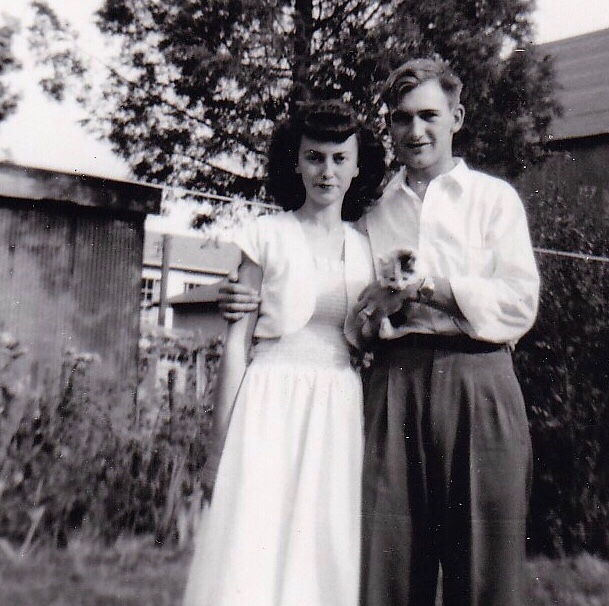
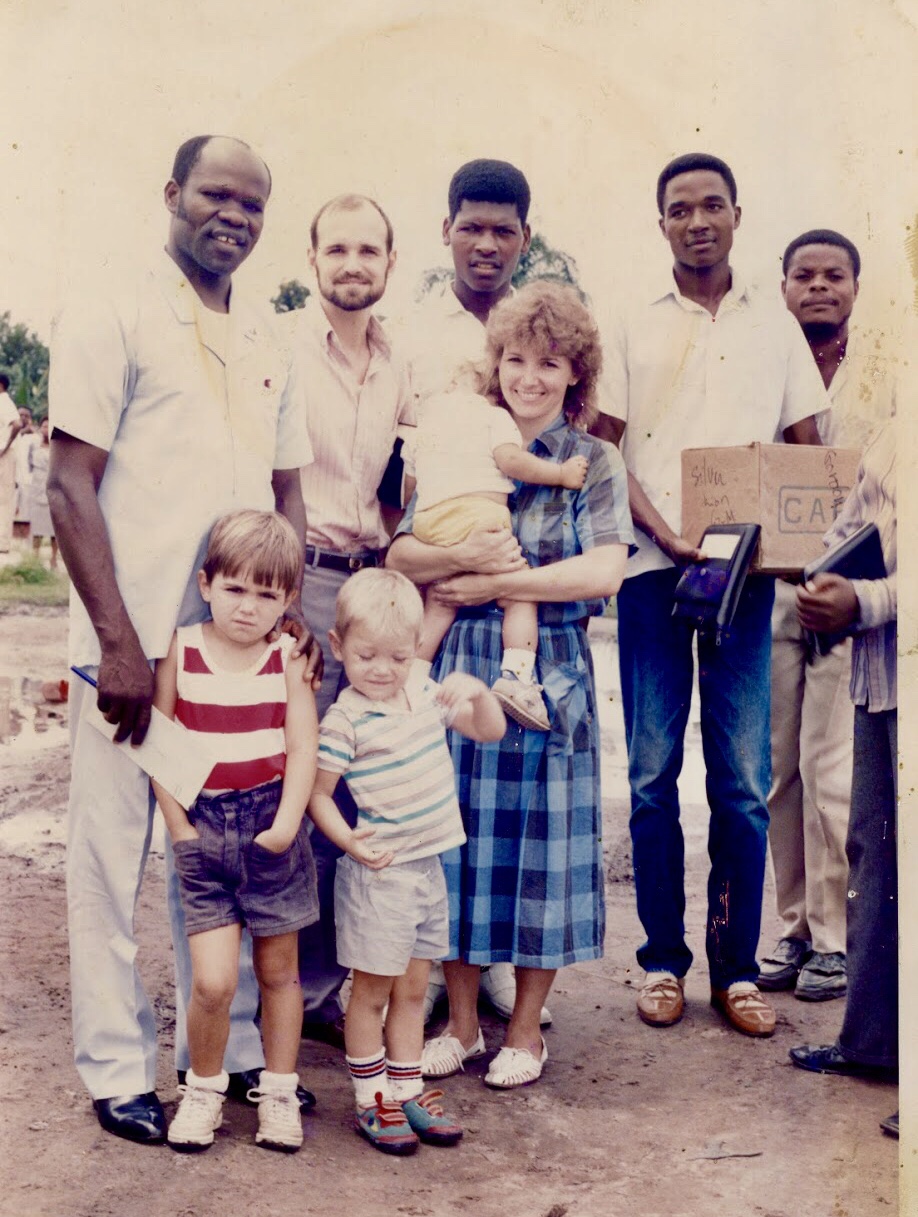
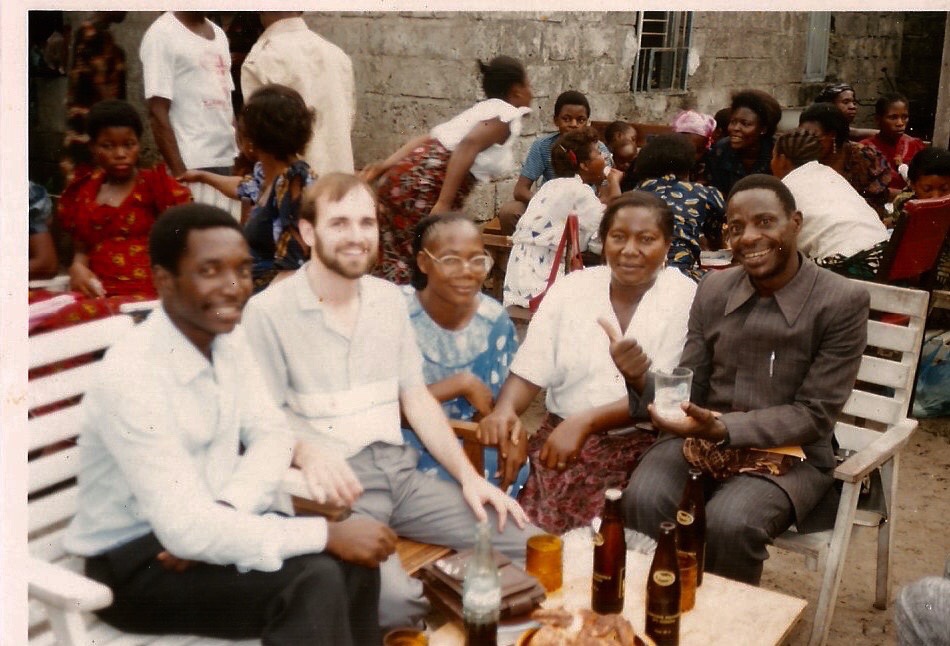
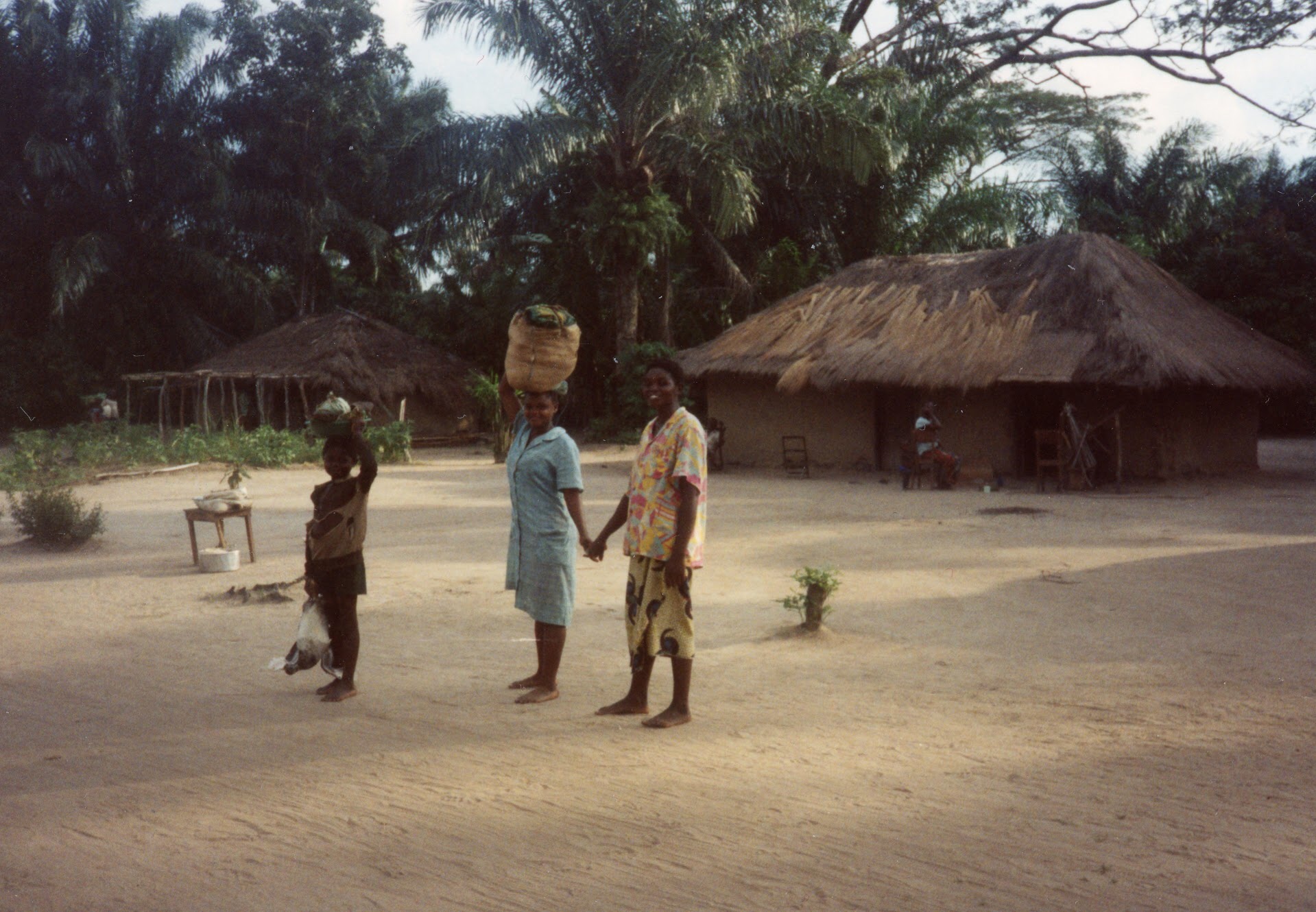
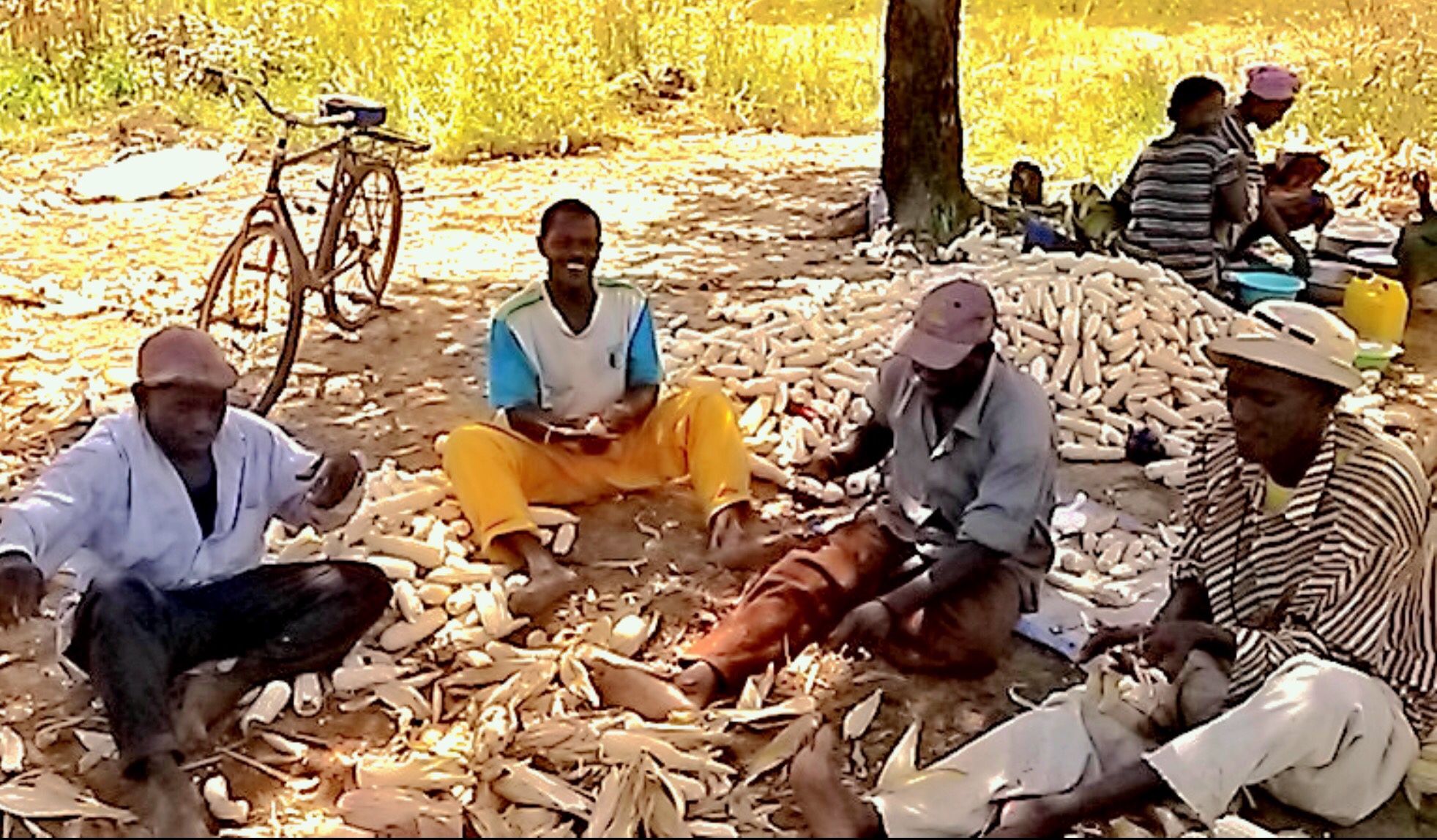

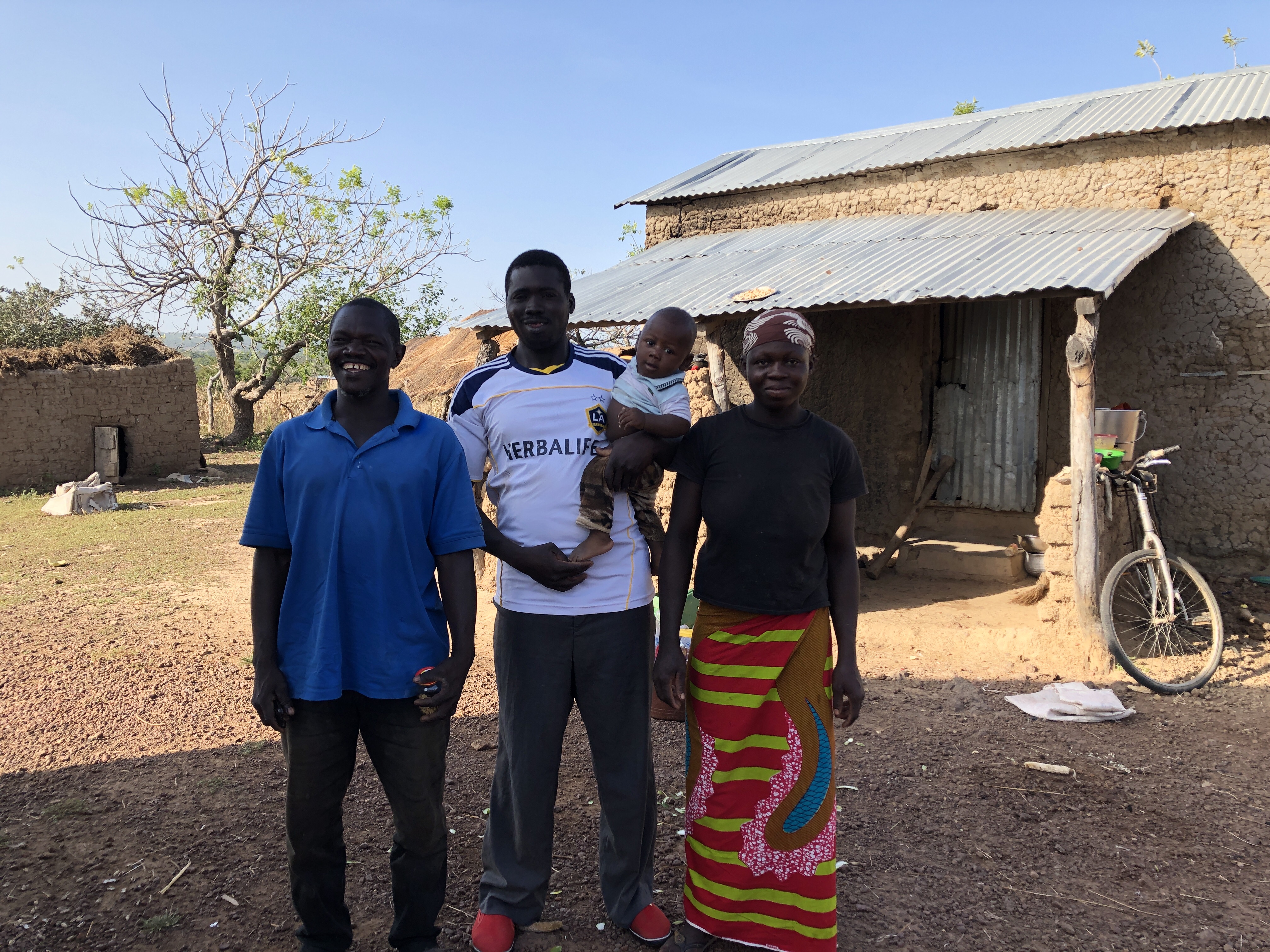
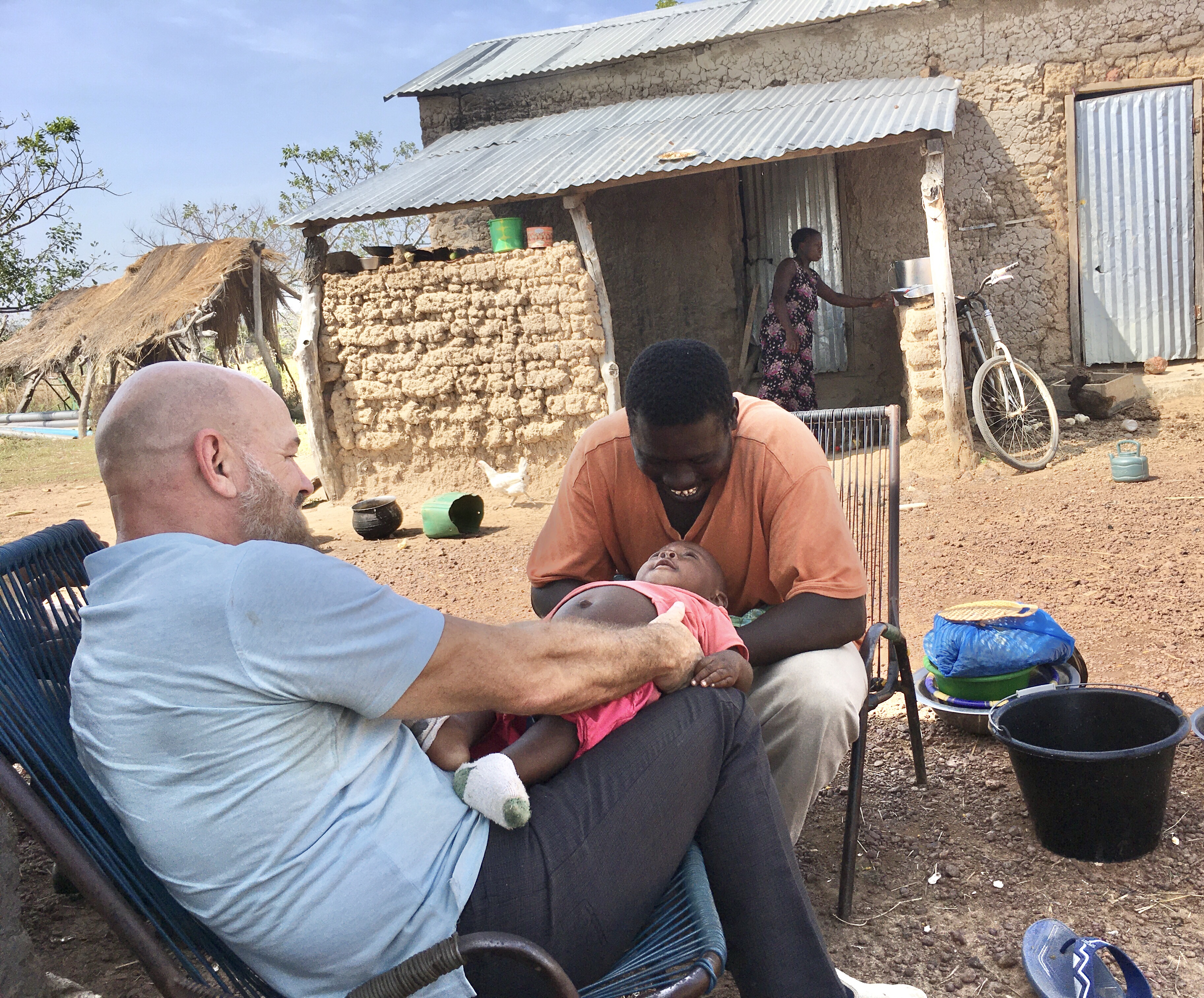


 God spoke to me so much through these individuals, many of whom had never filled out an application form in their lives and were not comfortable talking about themselves. More than ever, my conviction has been confirmed that the Lord is actively at work in our world, doing amazing things on a regular basis through ordinary, unknown people who love Jesus – people who are not now nor ever will be in the limelight. They are faithfully living out their ordinary lives and fighting the good fight of faith in places I never knew existed until recently – places in which Christianity has nothing to do with multi-million dollar stadium events, expensive fashion trends and Christian subculture social media fame.




 Know This Love