I’ve just done something I’ve never done before, and would never have pictured myself doing. It’s kind of about cancer, and about fitness and how it helps me stay a step ahead, and … well… I’ve just entered a fitness competition! I was worried that people might think this was a ‘show-off’ kind of thing, and out of character for a pastor/missionary/international Christian worker. And then I remembered I’ll be 65 this year and that worrying over-much about people’s opinions should be something I’m over, or at least getting over. At the end of this post you’ll find a link to my profile page for this online competition, with all the details. But first, a little backstory…
Chemo day, which is a once a month thing these days.
Sometimes in life I’ve felt the pressure to prove myself. When you’re a short, small guy and you don’t burst on the scene loud & proud, bragging about all the great things you’re going to do, people tend to underestimate & overlook you. 38 years ago when my wife and I were preparing to go to Congo as missionaries, many of our friends and peers had doubts… “Little Paul & Cindy, (I was 5’6” and 120 pounds soaking wet, Cindy petite and under 5 feet). “How are they going to make it in a rough place like Congo? I can’t see them lasting.” We were too nice, too gentle, too timid, to shy, too naive, not bold enough and not brave enough, etc.
But strength and resilience are more internal than external realities and often not visible on the surface – until circumstances call for them. By God’s grace, we not only survived, we thrived. We embraced our new country and culture with open arms and hearts, lots of flexibility, and certainly some mistakes along the way. We didn’t really have to prove ourselves – circumstances proved us while we weathered the inevitable storms. And that’s how life works if we can trust God and be humble.
Way back in the day – the family of 5 that fit on a Yamaha
But these days, I don’t feel that pressure. After Friday’s chemo, which leaves me really tired for several hours, I took a nap, and eventually went to the gym. No need to prove to anyone that I’m strong, resilient and I don’t need rest. I need it, believe me, and age is definitely a factor – but also an advantage… I’ve done the hard stuff, the risky stuff, lived in some of the most difficult places in the world, faced plenty of dangers, argued my way through military blockades manned by drunken soldiers waving guns, become fluent in two languages besides English, and served people in need on several continents. I plan to continue. It’s been a joy, a privilege and it’s all by God’s grace. But at this stage in life I don’t need to prove anything. I’m just hoping to continue improving myself and to be an encouragement to others.
So… I’ve entered this competition – because I thought it would be fun to do something totally different – which can also serve as an opportunity to encourage people toward fitness, as well as a chance to do some more good in this world. Check it out! Voting starts Monday, May 1st. Follow the link below. And thanks!
If you’ve ever failed miserably, let others down and disappointed yourself beyond what you thought possible, here is some is good news. The Gospel accounts of events leading up to Jesus’ death on the cross and those surrounding His resurrection are full of lessons for us – if we will take the time to look, listen and learn. Let’s explore just one of those lessons, which plays out in the life of Peter.
“You will all fall away,” Jesus told them, “for it is written: “‘I will strike the shepherd, and the sheep will be scattered.’ But after I have risen, I will go ahead of you into Galilee.” Peter declared, “Even if all fall away, I will not.” “Truly I tell you,” Jesus answered, “today—yes, tonight—before the rooster crows twice you yourself will disown me three times.” But Peter insisted emphatically, “Even if I have to die with you, I will never disown you.” And all the others said the same. (Mark 14:27-31)
“My children, I will be with you only a little longer. You will look for me, and just as I told the Jews, so I tell you now: Where I am going, you cannot come. A new command I give you: Love one another. As I have loved you, so you must love one another. By this everyone will know that you are my disciples, if you love one another.” Simon Peter asked him, “Lord, where are you going?” Jesus replied, “Where I am going, you cannot follow now, but you will follow later.” Peter asked, “Lord, why can’t I follow you now? I will lay down my life for you.”
Then Jesus answered, “Will you really lay down your life for me? Very truly I tell you, before the rooster crows, you will disown me three times! “Do not let your hearts be troubled. You believe in God; believe also in me. My Father’s house has many rooms; if that were not so, would I have told you that I am going there to prepare a place for you? And if I go and prepare a place for you, I will come back and take you to be with me that you also may be where I am. You know the way to the place where I am going.” (John 13:33 – 4:4)
From the start, Peter had been part of Jesus’ inner circle. Along with James and John, he had been included in some of the most powerful encounters and intimate moments of the Lord’s three and a half years of ministry—but yet he often missed the point and failed to see beyond the surface to receive Jesus’ self-revelation in those moments. He was more focused on the “success” of the enterprise and what he could do to ensure that success (especially as Jesus’ most dedicated disciple—in his own mind at least), and so he failed to experience the intimacy that was being offered. It’s hard to experience intimacy in relationships when you’ve always got something to prove. But now Jesus was going away, and this time the disciples couldn’t follow—not even Peter. He couldn’t accept that there was something he was not capable of doing, especially when it was the most important thing of all.
Observe in Mark’s account of the Upper Room scene how Peter essentially claimed to be the most dedicated disciple: “Even if all fall away, I will not!” I wonder how the other disciples felt about that statement? I’m sure Peter’s heart sank like a stone when Jesus looked at him and said, “No, Peter, not only are you incapable of following Me right now, but you’re going to fall flat on your face just trying!”
Imagine yourself in Peter’s place. After all this time working your hardest, trying your utmost to prove your worth, to be the best, Jesus has just told you that you will fail—and fail badly! You would feel sick with dismay and disbelief. But then, in His very next breath, Jesus said the craziest thing: “Don’t worry about it—it’s going to be okay. Trust God, and trust Me! (Maybe as opposed to trusting in your own ability get everything right). I’m going to do something for you, something that will make it possible for you to follow Me and to be with Me—really be with me—where I am. I’m going to bring you to a place of intimacy you could never get to on your own!”
As that night progressed, events unfolded just as Jesus predicted. When He was arrested and taken to the residence of the high priest, Peter and John followed at a distance. John was somehow already known to the high priest’s family, so he went in, but Peter had to wait at the gate until John came back out to vouch for him. And this was where Peter’s bold claims—that he would follow Jesus to the end and never falter— pitifully unraveled. A servant girl, the most unimportant person imaginable in that day, was on-duty at the gate. And suddenly all of Peter’s bold self-confidence, all of his formidable selfstrength, crumbled in that moment as she challenged him with the question: “You aren’t one of this man’s disciples too, are you?”
“I am not!” All the hidden fear, all the human weakness that he could never acknowledge, betrayed him in that moment, and he couldn’t stand up to even a young teenage girl—let alone the men who would question him a second and third time as they all stood around a charcoal fire to stay warm. He would make the same denial at each challenge, finally with some angry curses thrown in for good measure. He would come to intimately understand the reality of his weakness as a man, the limits of his own ability. The Scripture tells us that after that took place, he went out and wept bitterly. My guess is that he was not only weeping over the fact that he had publicly disowned the dearest Friend a man could ever have, but he was equally weeping over the shattering of that false but cherished self-image he had held as the strongest, the best, the most devoted disciple. When that image you’ve lovingly polished and protected lies in pieces around you and you are brought to realize that you’ve done no better than anyone else—and possibly much worse— it’s a bitter moment indeed. But it’s also a blessed one. It was by far the worst thing and, at the same time, the best thing that could have happened to Peter. That native independence, born of a naïve trust in his own abilities, was finally crumbling.
Follow Me—Intimacy through Obedience
If you’ve read the gospel accounts, you know the rest of the story. In the days following Jesus’ resurrection, He appeared to the group of disciples on several occasions with words of peace, reassurance, and the hope of good things to come. Beneath the mind-blowing joy they must have experienced, however, I wonder what was going on in Peter’s heart and mind. From the confusion of Jesus’ arrest in the Garden of Gethsemane, where “they all left Him and fled,” to Peter’s pivotal failure in the courtyard of the high priest, none of them had exactly been star performers! The private conversations Jesus must have had with the disciples after His resurrection are not recorded for us (and I like that fact, actually!), but this “inbetween time” had to have been somewhat awkward while everyone waited for whatever was coming next. You see, there was an “elephant in the room”—Peter’s profanity-laced denial of Jesus—which no one was talking about. Peter must have been wondering if things could ever be the same between him and the Lord—but Jesus had a plan. And no, this relationship would never be the same. It would actually be better and deeper than ever before.
Finally the day came for a “reboot” of Peter’s relationship with Jesus, the day to clear the air and to begin again. Take a few moments to read about it in John 21: “Afterward Jesus appeared again to his disciples, by the Sea of Galilee. It happened this way: Simon Peter, Thomas (also known as Didymus), Nathanael from Cana in Galilee, the sons of Zebedee, and two other disciples were together. “I’m going out to fish,” Simon Peter told them, and they said, “We’ll go with you.” So they went out and got into the boat, but that night they caught nothing. Early in the morning, Jesus stood on the shore, but the disciples did not realize that it was Jesus. He called out to them, “Friends, haven’t you any fish?” “No,” they answered. He said, “Throw your net on the right side of the boat and you will find some.” When they did, they were unable to haul the net in because of the large number of fish. Then the disciple whom Jesus loved said to Peter, “It is the Lord!” As soon as Simon Peter heard him say, “It is the Lord,” he wrapped his outer garment around him (for he had taken it off) and jumped into the water. The other disciples followed in the boat, towing the net full of fish, for they were not far from shore, about a hundred yards. When they landed, they saw a fire of burning coals there with fish on it, and some bread. Jesus said to them, “Bring some of the fish you have just caught.”
So Simon Peter climbed back into the boat and dragged the net ashore. It was full of large fish, 153, but even with so many the net was not torn. Jesus said to them, “Come and have breakfast.” None of the disciples dared ask him, “Who are you?” They knew it was the Lord. Jesus came, took the bread and gave it to them, and did the same with the fish. This was now the third time Jesus appeared to his disciples after he was raised from the dead. When they had finished eating, Jesus said to Simon Peter, “Simon son of John, do you love me more than these?” “Yes, Lord,” he said, “you know that I love you.” Jesus said, “Feed my lambs.” Again Jesus said, “Simon son of John, do you love me?” He answered, “Yes, Lord, you know that I love you.” Jesus said, “Take care of my sheep.” The third time he said to him, “Simon son of John, do you love me?” Peter was hurt because Jesus asked him the third time, “Do you love me?” He said, “Lord, you know all things; you know that I love you.” Jesus said, “Feed my sheep. Very truly I tell you, when you were younger you dressed yourself and went where you wanted; but when you are old you will stretch out your hands, and someone else will dress you and lead you where you do not want to go.” Jesus said this to indicate the kind of death by which Peter would glorify God. Then he said to him, “Follow me!” Peter turned and saw that the disciple whom Jesus loved was following them. (This was the one who had leaned back against Jesus at the supper and had said, “Lord, who is going to betray you?”) When Peter saw him, he asked, “Lord, what about him?” Jesus answered, “If I want him to remain alive until I return, what is that to you? You must follow me.”
Peter’s journey with Jesus had begun several years before with a very similar event, after he had fished all night with his companions and caught nothing, but then after following Jesus’ instructions, he had put down the nets one more time and hauled in a huge catch. At that time, he was overwhelmed with the realization of his own weakness and Jesus’ supreme ability and authority, and he humbled himself. (See Luke 5:1–11.) Jesus’ response was simply, “Don’t be afraid!” with an invitation to follow Him. So maybe this scene in John 21 signaled a new beginning for Peter, another chance to leave behind his own way of doing things through brash self-confidence, and to become a trusting, obedient follower submitted to the Father’s will. I love the way Jesus confronted and restored Peter as they all sat around a charcoal fire on the beach. It was simple, it was kind, and it cut right to the heart of the matter. There was no formal inquisition in front of a tribunal to rehearse Peter’s failure, to underscore how terrible it was. Just a conversation that took place in a circle of intimate friends, dealing with matters of the heart.
“Peter, do you love Me more than these?” Remember Peter’s confident boast—that even if everyone else fell away, he would still be right there at Jesus’ side? There’s no boast now, just a humble, sincere, “Yes, Lord, You know that I love You.” He didn’t add anything to it, no big claims, no declarations of the great things he was going to do or the impressive plans he had. Peter finally understood his own weakness, his capacity for failure, and his deep need. From that day on, he was letting Jesus take the lead and set the agenda. Twice more, the same question, until Peter’s heart was sore. But this question was the only one that really mattered. Love. It means we’re not free to do our own thing, run our own show, and go our own way. That independent way of life and those days of immaturity must be left behind; things are different now. Love binds us to the Beloved, to His agenda, His people, His priorities. This is the intimacy of obedience.
The command that Jesus attaches to love is the command to serve, to take care of others for His sake, rather than to chase greatness in an attempt to prove our own ability and worth. Jesus’ final words to Peter in this chapter may sound ominous, this contrast between when he was younger, when he did what he wanted and went where he pleased, and the future, when he would abandon his freedom utterly for the sake of love—even to the point of death. But the reward was intimate fellowship with Jesus, and so one last time, the invitation came with the force of a command: “Follow Me!”
There is a daily choice set before us between the independence of self-sufficiency (which is so admired in this world), and that special fellowship with God that we can only experience through humility, dependence, and obedience. And this is the one thing that will truly satisfy our souls.
Hast thou no scar? No hidden scar on foot, or side, or hand? I hear thee sung as mighty in the land; I hear them hail thy bright, ascendant star. Hast thou no scar?
Hast thou no wound? Yet I was wounded by the archers; spent, Leaned Me against a tree to die; and rent By ravening beasts that compassed Me, I swooned. Hast thou no wound?
No wound? No scar? Yet, as the Master shall the servant be, And piercèd are the feet that follow Me. But thine are whole; can he have followed far Who has no wound or scar? (Author: Amy Carmichael)
Praise be to the God and Father of our Lord Jesus Christ, the Father of compassion and the God of all comfort, who comforts usi in all our troubles, so that we can comfort those in any trouble with the comfort we ourselves receive from God. 2 Corinthians 1:3-4
A long time ago:
1988, Kinshasa, Zaire – our little family with some friends.
It would take too long to give you the backstory, all the how and why and history that led to this situation – and it would cause your eyes to glaze over with boredom anyway. So I’ll just give you the basic “what.” September 24-25, 1991, Kinshasa, Zaire. An economy in free-fall. (And I don’t mean the price of eggs was high. I mean parents eating every other day so they could maybe feed their children once a day). Unpaid military going on a wild rampage, looting and shooting up most of the city, including our neighborhood. Non-stop gunfire and a night spent on the floor in the hallway with the kids, while bullets bounced off the house. In the morning, a brief calm, which seemed like a good opportunity make a run for it and join some friends on a nearby street. Not because it was any safer, but just for moral support. We grabbed passports and threw a few essentials in backpacks, and hurried there on foot. Just as we began to feel some calm and breathe a sigh of relief, a large, angry mob appeared, intent on looting whatever the soldiers might have passed over.
Glass shattering.
Rocks and chunks of broken cement crashing against the security bars over the windows.
And the the front doors – metal doors also with glass and security bars – being bashed in and wrenched. The sound was sickening.
There was no negotiating with this mob. I tried, and quickly jumped out of the way of a barrage of rocks thrown at my face. We gathered everyone in the small hallway, the adults surrounding the kids. My three little boys were looking up at my face, wide-eyed. I assured them we’d be fine, that the Lord would take care of us. I believed that. But I was also trying to work out in my mind how I could shield my sons and my wonderfully calm wife with my body – all 125 pounds of me – if this crazed mob succeeded in breaking down the doors. They did not succeed, we got out safely, and three days later found ourselves on an evacuation flight straight to Andrews Airforce Base in Maryland, USA.
In the immediate aftermath we thought we were all fine. We’d gotten out with our lives, if not our possessions. We were convinced that God is always good – and it was maybe a point of pride to let everyone see that we were tough, resilient, and that it was all no big deal. We framed it as a great adventure. As my wife would say, “just an occupational hazard.” And it still is. But we were not OK. Aside from the reverse culture shock and disorientation we felt being suddenly back in America, unplanned, we were struggling to manage grief we didn’t know what to do with, grief that no one around us could understand or share. From the point of view of friends and loved ones in America, we were ‘back home’ safe and sound. That’s what mattered and we should be thankful. But the reality was that we had not only left, but had just lost our home, our cherished friends, our ministry – an entire life that we knew and loved, a dream-come-true that we’d hoped would never end. It was gone in a matter of a few days.
The good life, in Lodja, Zaire, 1990
Our mission organization didn’t exactly know what to do with us. PTSD counseling wasn’t really a thing in those days, or at least not a thing we knew about. We muddled through, our boys muddled through, and though we all looked good on the outside, it took a while before we were really OK. There was so much kindness extended to us, a church family that welcomed us, loved on us and was patient with us. God provided for our needs in wonderful ways. He had a truly good plan for us, but it took me a while to let go of my own shattered dreams and to be able to accept that new plan. Things turned out better than I could have ever imagined, and I’m eternally grateful.
We did not come through it all unscathed, however. There are scars on our souls that are still sensitive 32 years later, that throb and ache on occasion. We are OK with that. We were in the place God called us to be, doing what He had called us to do, so we have no regrets. But we live with consequences. It hurts to know that our grown sons, who are all fine men of integrity, have struggled with anxiety issues as adults, stemming from that ‘adventure.’ And we are proud that they have all shown great wisdom and courage to seek out help – and as a result have grown tremendously. There is a grace that accompanies these scars, these old aches – a grace and comfort that are expressed in absolute dependence on our good Father, and in empathy and compassion for others. That’s not a bad thing, because through our weakness and vulnerability, the Father shows Himself strong. But in most Christian traditions – and especially American Christianity – we despise weakness and adore the appearance of strength, which so often makes us dishonest, even with our own selves.
American Christianity is afflicted with a triumphalism that is unrealistic and that forces people to live in denial – a theology that insists on complete, perfect healing in the here and now for every grief and loss. I’m a firm believer in divine, miraculous healing, in restoration, in abundant life. I’ve experienced it, and I am experiencing it even now, while I continue to live with some holes in my soul, some pains that may never be healed this side of heaven. That is the testimony of the Apostle Paul as well as many saints through the ages. It is far better, and far more powerful, to live with those ‘thorns in the flesh’, in humble dependence on the God whose grace is sufficient, than to live in proud denial, insisting that everything is ‘fine.’
Resilience is an indispensable quality we must develop, but it cannot be based on our own strength, grit and fierce independence. If it is, we become brittle, hard-hearted, and grace-less toward those around us. I know because I was definitely there at one point! Resilience must be rooted in an unshakable belief in the goodness of God and in a willing dependence on Him – and on those helpers he sends to us.
Therefore, in order to keep me from becoming conceited, I was given a thorn in my flesh, a messenger of Satan, to torment me. Three times I pleaded with the Lord to take it away from me. But he said to me, “My grace is sufficient for you, for my power is made perfect in weakness.” Therefore I will boast all the more gladly about my weaknesses, so that Christ’s power may rest on me. That is why, for Christ’s sake, I delight in weaknesses, in insults, in hardships, in persecutions, in difficulties. For when I am weak, then I am strong. 2 Cor. 12:7-10
To sum up, not every wound will be perfectly healed, every scar erased, every unsatisfied longing filled in this present age. There is a difference between Here-and-Now, and Then-and-There. And in the meantime, in this time, those scars, those holes in our souls with ragged edges, can become portals through which the powerful grace of God flows to us and through us to those around us who need it so much. And that, beloved of the Lord, is a privilege and not a burden, while we hopefully wait for the restoration of all things.
And I heard a loud voice from the throne saying, “Look! God’s dwelling place is now among the people, and he will dwell with them. They will be his people, and God himself will be with them and be their God.‘He will wipe every tear from their eyes. There will be no more death or mourning or crying or pain, for the old order of things has passed away.”He who was seated on the throne said, “I am making everything new!” Then he said, “Write this down, for these words are trustworthy and true.” (Rev. 21:3-5)
Here we are, well into 2023 already! Once again, it’s been a while since I’ve updated this blog, and I really am going to post more Africa chronicles in the months to come… But for now, I just want to share a recent experience, along with some reflections, that I hope will be insightful and maybe even helpful for you in your own journey, as we step into a new year.
I hope you believe – I mean I hope you are convinced in your heart of hearts – that God in his infinite kindness is always seeking to do you good. In a world where we go through so many hard things, where loss, grief, trauma and difficulties of all kinds seem to be par for the course, He is actively at work – often unnoticed by us – arranging circumstances and setting us up to receive exactly what we need, even when we don’t what that is. It was this way for me recently.
In the course of my work I had been assigned to help out with a project in Baltimore, Maryland for 2 weeks. To be honest, I was not especially excited about being away from home for this chunk of time between Thanksgiving and Christmas. Working in a busy warehouse, in close contact with hundreds of volunteers each day – this made me anxious as well. Being on monthly chemotherapy for multiple myeloma makes me a bit more susceptible to catching colds, flu, or even Covid, and this did not seem like an ideal scenario from a health standpoint. On the other hand, I’d been traveling internationally all year long, moving through busy airports and sitting on full flights for hours on end, and had managed to stay healthy (mostly). So off I went to Baltimore. Not Atlanta, or Denver, or Chicago – which were all possibilities, and I could have been sent to any of these locations.
Working with Operation Christmas Child volunteers in a Baltimore warehouse.
Baltimore is special, because this is where Cindy and I lived for 25 years before moving to the mountains of Western North Carolina. The warehouse where the project was going on was just down the road from the church where I served as pastor for 16 of those 25 years, and where we remained deeply involved until I left in September 2019. Happily, I was invited to preach there while in town for the project, and this would give me an opportunity to catch up with this dear group of people with whom we had experienced so much over the years – triumphs, tragedies, change and growth and all the ups and downs of following Jesus together in this broken world.
I was excited not only for the chance to bring everyone up to date on the big happenings of life and ministry over the last three years, but also to share a Word from the Lord that seemed so appropriate for this family of believers. What I was not prepared for was the flood of emotion that hit me as people began to arrive – these precious, dearly loved saints – that I had not seen face to face for far too long. Someone would come in, we’d look at each other, and the tears would start to flow. I could not stop them as people hugged my neck, and even as I stood up in front of the congregation to preach. As I looked out over this gathering, with each face I was seeing a story – stories of brokenness, healing, survival through crushing loss, restoration, miracles of mercy and triumphs of grace, so much growth – all the various ways God had shown Himself faithful in individual lives over the years. Often, I’d had a front-row seat as a helper, hand-holder, counselor and friend as these stories had unfolded. Love demands so much, but the rewards are rich and deep.
Preaching at Community Gospel Church in December 2022
It’s not an exaggeration to say that this gathering on the first Sunday of December was cathartic, at least for me. I was being healed in ways I didn’t know I needed to be healed. It took me a few days of reflection to process and to understand what was happening. There is a backstory of events that were, in their own small way, traumatic. Unexpected, unintended loss – things that had wounded my soul, events that I had pushed through without much thought in my forward-looking, ‘let’s get on to the next thing’ way of moving through life.
When I left the Baltimore area in September 2019, I had no idea it would be more than three years before I’d be able to return. I’d planned to return – even to make several trips – during the ensuing months, so that Cindy and I could get our house sold, pack up our belongings, have those farewell visits and a proper send-off with our church family. Because of events beyond anyone’s control, none of that happened. For the first several months I was just busy getting settled into my new job and traveling in Central Africa with Operation Christmas Child. Then without warning, my cancer numbers doubled – the multiple myeloma was quickly coming back. (Up until then I’d been coasting along with no treatment, in remission or close enough, for a few years). About the same time, Covid lockdowns began AND I started weekly chemo treatments, with Cindy still in Maryland and me in North Carolina. No one could go anywhere, we all started working from home, and I was alone. The situation wasn’t impossible, but it was a new kind of hard. Eventually Cindy was able to join me in North Carolina. The health journey continued to be an adventure involving difficult decisions. While going through screening for a stem cell transplant it was discovered that I had colon cancer. I had surgery for that instead of the stem cell transplant, and started a new course of chemotherapy for the multiple myeloma, all before 2020 came to a close. With the new chemo regimen, I had to work from home for the first four months of 2021. For an extrovert who thrives on connection, this kind of isolation was another hard thing. So that’s the backstory. Eventually things eased up, I returned to working in an office, and also to travel in Africa, and we forged ahead without a backward glance.
It’s called resilience – the ability to bounce back, to push forward, to keep your head up and keep going in the face of hardship. It’s a great quality. But I was mostly unaware of the holes all these hardships had punched in my soul: the sadness of farewells that were left unsaid, and the send-off that could never happen; how deeply I missed my church family; the trauma of bad health news, bone-marrow biopsies, starting another round of chemo – this time with not a friend on hand to offer a hug (until Cindy was able to join me). And so many major changes in a relatively short time. Was God faithful through it all? Absolutely! Faithful and merciful. But the emotional impact, the loss – those holes in my soul – were also real, even though I was hardly aware of them. I kept assuring everyone that I was fine. But I needed some patching up, some closure, some comfort and healing that I wouldn’t have known how to arrange, even if I could have. So the Lord lovingly arranged it all for me in a place where the tears could flow and people would understand. I’m still, weeks later, reflecting, praying, unpacking some things from that special Sunday morning. The hugs, words of encouragement, people sharing with me the impact I’d had on their lives and their walk with God – all of these were unexpected gifts that day.
Why am I sharing all this? It’s not simply to talk about myself or to impress on you what a hard time I’ve had – everyone goes through hard times. My point is this: we all go through seasons and experiences that leave us with wounds, losses, and accompanying heartache or trauma. Often we are so busy just trying to navigate through these seasons and keep our heads above water that we hardly notice the impact on our souls. We keep ourselves anesthetized with activity and simply plow ahead to the next thing, maybe breathing a sigh of relief that we made it through. Eventually, however, those losses never grieved, wounds never addressed, pages of our story ripped out of the book rather than gently turned – they become weights that make life heavy, or locked doors that seem to block us from forming new friendships, or an unease that makes quiet meditation and stillness almost unbearable. So this is a call – an invitation – to quiet, personal reflection on your journey, and maybe to healing.
In Paul’s second letter to the Corinthians, where he talks plainly about some of his own hardships in the course of following Jesus and serving God’s people, he calls God ‘the Father of mercies and the God of all comfort, who comforts us in all our troubles, so that we can comfort others with the same comfort we have received.’ Comfort is an intangible, but nonetheless essential and powerful element in our emotional well-being. If you never receive it, you are not equipped to give it. Without taking you through an extensive Bible study, I’ll just say that comfort – both receiving and giving it – is a key concept in Scripture. Without it, the qualities of strength and resilience that we admire so much can turn into hard-heartedness and cold stoicism, and that’s not Jesus. We are all of us more fragile than we realize or like to admit, but our Creator understands us. ‘He remembers that we are dust’ according to Psalm 103, and He has compassion on us like a father for his children.
He is always ready to comfort us, whenever we are ready to recognize that we need it and open our hearts to receive it. Comfort doesn’t undo what has been done, it doesn’t compensate the losses or turn back time. But it eases the pain and validates the grief. Comfort says, ‘what happened matters, it’s signifiant, you are significant, your are not alone, and one day, all will be made right.’ For me, that makes all the difference, and maybe it will for you too. My prayer is that God in His kindness, who knows just what you need, will lead you to that place as we make our way forward in 2023.
A note: This post is a little parentheses in the ‘village chronicles’. During that first year of ministry and of getting our team established in the village in Mali, my health began to visibly deteriorate. In September 2013 I was diagnosed with an incurable blood cancer. I was in the last stage and it seemed I would die. I didn’t die and retuned to work in the village 6 months later. Now, nine years later, I’m still here by God’s grace. I’ve learned a few lessons, and I’d like to share one of them here.
I like to think of myself as the eternal optimist. You know, the ‘don’t-worry-be-happy-have-faith-and-everything-will-work-out-just-fine’ kind of person. The problem with that positive self-image is that my behavior doesn’t always line up with it.To be frank, I’m an experienced complainer, but since I know how unwelcome and unpleasant complaining is for the people around me, I try to keep it to myself. So I murmur, I grumble under my breath, and I heave sighs of exasperation when things don’t go my way. Often these ‘things’ are minor irritations, not even worth the breath it takes to heave that sigh.
It’s not that I’ve never read the many biblical admonitions to be thankful, or those very clear warnings against complaining and grumbling. It’s just that ingrained habits are hard to change, even when we want to change them! How fortunate for me that in the fall of 2013, I was given a golden opportunity in the form of some very sobering news: I was diagnosed with multiple myeloma, an incurable cancer of the bone marrow, which in my case had already progressed to the third and final stage. News like this is way too big to be handled with childish whining and complaining, which never helps anyone to experience the grace of God – and I needed that grace! Here’s how it came. Instead of fear (although there were occasional moments of fear), or anger, or self-pity, a deep sense of thankfulness began to well up in me – thankfulness that I belong to the Lord, that he is good, that He loves me, and that he is in control of a situation that is beyond my ability to fix.
The sheer number of people who began pray for me was not only encouraging, it was extremely humbling. After all, who am I to merit so much love and attention? But then that’s grace – the kindness and favor of God that we could never earn. Over the weeks and months of doctor visits and chemotherapy sessions, I gained a deeper appreciation for simple, daily gifts of grace, – like the energy to prepare a meal or rake leaves in the backyard – and a deeper perspective on being thankful. That’s what I want to share with you here.
“Give thanks to the Lord, for he is good. His love endures forever.” Psalm 136:1
The second part of this simple refrain – His love endures forever – is repeated in each of the twenty-six verses of Psalm 136. Maybe with the original music it was just too irresistible, like the ‘hook’ in a good pop song that sticks in your head all day and won’t quit. It might have been! But since Scripture is divinely inspired, whatever the artistic reasons of the psalmist, it seems obvious that the Author behind the artist wanted us to learn something, and learn it well! For some of us, the song has to be accompanied by a life-altering event before the message sinks in, but the Lord is a patient and persistent teacher…
Learning to say ‘Grace‘
To ‘say grace’ is a common expression we use in English, meaning to offer a prayer of thanks at the start of a meal. Like most idioms or figures of speech, it doesn’t make much sense if taken literally, but the meaning behind it is fairly obvious. ‘Saying grace’ is a humble acknowledgement that the food in front of us is a sheer gift of God’s grace and not something we deserve as our right, or something we earned without God’s gracious help.
“Now wait just a minute!” you might say. “It was my hard work that put that food on the table, and the roof over our heads too. There’s no hand-out here – I earned every bit of this!” Yes, but that’s not the whole story…
Entitlement is the subtle but destructive enemy of a thankful heart, the very antithesis of grace. It’s the assumption that others, God, or life in general owe me something because I’ve been good, I’ve kept the rules, I’ve worked hard; or because I’ve had a hard time of it, I’ve been wronged somehow, and now I deserve compensation. The Bible is clear, however, that the goodness of God is the ultimate source of every good thing we receive or experience in life. Every good thing that comes to us comes not because we are good, but because He is. Consider these verses:
Be careful that you do not forget the Lord your God… Otherwise, when you eat and are satisfied, when you build fine houses and settle down, and when your herds and flocks grow large and your silver and gold increase and all you have is multiplied, then your heart will become proud and you will forget the Lord your God, who brought you out of Egypt, out of the land of slavery… You may say to yourself, “My power and the strength of my hands have produced this wealth for me.” But remember the Lord your God, for it is he who gives you the ability to produce wealth, and so confirms his covenant, which he swore to your ancestors, as it is today. (Deuteronomy 8:11-18, selected verses).
Every good and perfect gift is from above, coming down from the Father of the heavenly lights, who does not change like shifting shadows. (James 1:17)
The truth is that life is fragile, weare fragile. Wealth, health and strength, our intellectual ability, our comfortable circumstances – all the things we take for granted – are gifts, not guarantees. They can be gone in a single heartbeat. I knew all this before, but now I know it firsthand. The fact that you have a job, the strength and ability to do that job, as well as the circumstances and events that led you there – all of it is grace. Not one of us is ‘self-made. Entitlement thinking robs us of this perspective; it makes us cranky, peevish and offended with God when the road gets bumpy. And it tends to makes us proud, smug, and insensitive to others when our particular road is smooth and trouble-free.
Nebuchadnezzar is a biblical character who had to learn this lesson the hard way, and you can read about it in the Old Testament book of Daniel, chapter four. Nebuchadnezzar’s accomplishments were stellar. In 605 B.C. while his father was king, he led the Babylonian army in the defeat of both the Egyptian and Assyrian armies at the battle of Carchemish, and the regions of Syria and Phoenicia were added to Babylon’s empire. Becoming Babylon’s king after his father’s death, he continued to enlarge and consolidate the empire, and then turned to an ambitious project of public works that was unrivaled in his day. He had much to be proud of, but he failed to realize how much of his success was due to God’s providence and that ultimately, he was in such a position of power because the ‘God of heaven’ had put him there.
Nebuchadnezzar was warned in a dream to change his attitude, humble himself and acknowledge God’s grace in his life, or risk losing everything. Unfortunately, he didn’t take the warning to heart. Twelve months later, as he was congratulating himself once more on his great achievements, he lost his mind and with it his ability to rule – not to mention his dignity! The details of the story are rather shocking to our modern sensibilities in this politically correct world, where being a ‘nice person’ is the very pinnacle of good character. Would a good God really do something like that to someone!? Apparently He would, and he did; but we should realize that a good God and a ‘nice’ God are not at all the same thing. I’m convinced that God’s intentions are always good, but he’s never been shy about resorting to drastic measures when necessary. The king of Babylon spent the next seven years living literally like an animal, until, in his own words,“I, Nebuchadnezzar, raised my eyes toward heaven, and my sanity was restored. Then I praised the Most High; I honored and glorified him who lives forever…” (Daniel 4:34). In the remainder of his confession, he acknowledges that his power, position and privilege are gifts bestowed by a good and sovereign God. Among the many observations that could be made from this story, one that strikes me is that agrateful heart is essential to a sound mind. Finally, Nebuchadnezzar learned to say ‘grace’ over his circumstances, and so should we.
Learning About Forever
Psalm 136:1 tells us that we can and should give thanks because 1) the Lord is good, and 2) his love endures forever. These are not simply reasons to maintain a thankful heart, they are eternal realities that give us a foundation for continual thanks. A thankful heart has it’s roots in the dependable, unchanging character of God, rather than in circumstances which are always subject to change. Learning more about forever, and those things that are eternal, will set us free to savor the good times without anxiety, and strengthen us to ride out the difficult days with hope and a thankful heart. No matter what is happening in the present, it is passing; and after it has all passed, we’re going to have forever to experience the kindness of God! Consider this passage from Ephesians:
And God raised us up with Christ and seated us with him in the heavenly realms in Christ Jesus, in order that in the coming ages he might show the incomparable riches of his grace, expressed in his kindness to us in Christ Jesus. (Ephesians 2:6-7)
Exactly why did God ‘raise you up’ and make you part of his family? In order to show off the ‘riches of is grace.’ And how is he going to do that? By showering you with his kindness throughout the coming ages. God has plans to do you good throughout all eternity! Now that’s a reason to be thankful every day of your life.
Even the temporal blessings we receive – those happy events, answers to prayer, financial provision – are more than mere gifts to meet the need of the moment. As well as being gracious gifts, they are signs, intended to turn our focus from the immediate need or crisis to the Love that lasts forever, so that instead of living from crisis to crisis or need to need, we will learn to live in the security of that love. So often I have been guilty of receiving the gift – with short-lived thanks and a measure of relief – and then using it up without ever getting the message: “I am with you, I am for you, and it’s going to be OK!”
One occasion in particular comes to mind. I was a young husband, father, and Bible college student, struggling to make ends meet each month. I had a heavy course load, a part-time job, and traveled on weekends with a ministry team. One Friday afternoon, preparing to leave for another busy weekend, I had to face the fact that our fridge was empty and we had no money to buy food – much less to pay the rent which would be due in another two weeks. Although my wife Cindy tends to remain calm in situations like this, I was stressed to the limit and on the verge of quitting the ministry team then and there. And then there was a knock on the door. Here was an older couple we had never met, smiling uncertainly and holding out a check. “We don’t know you, but the Lord told us to give you this – ” it was a check for twenty-five dollars. The timing could not have been more perfect, nor the message more clear. Did I get it? Well, my face still goes hot with shame when I think about my reaction… Of course I warmly thanked the couple, they went on their way, and I experienced a momentary sense of relief. But on the heels of that relief came this thought: “Well, it’ll buy groceries, but it’s not going to pay the rent.” What an ungrateful jerk!! (Yes, I know that’s what you’re thinking, and you’re right). What was my problem? All I saw was twenty-five dollars, instead of seeing the good God to whom it pointed. I was looking at something that would be quickly used up, without recognizing the faithful love that provided it and that would go on providing. I can be a slow learner, but through that and several other incidents, I started to get it. And for the record, the rent got paid too – that month and every month thereafter.
Learning To Let Go
“At that time his voice shook the earth, but now he has promised, “Once more I will shake not only the earth but also the heavens.” The words “once more” indicate the removing of what can be shaken—that is, created things—so that what cannot be shaken may remain. Therefore, since we are receiving a kingdom that cannot be shaken, let us be thankful, and so worship God acceptably with reverence and awe, for our “God is a consuming fire.”
I’ve noticed that so often, just when I think I have life figured out, change happens. It can be frustrating, and sometimes downright scary! But that’s why learning to let go is essential to maintaining a thankful attitude. On this side of eternity we are pilgrims, and hanging on too tightly to what we have, and to the way things are, inevitably leads to resentment and unhappiness. Whether we want it to happen or not, the scenery will change and the furniture of life will get rearranged time and again. Our souls are continually seeking permanence and security. The problem is that the things of this world – be they material or circumstantial – can only give us an illusion of permanence, not the real thing. We have to keep reminding ourselves of the difference between now and Then, between here and There, between the world that is passing away and the Kingdom Which Cannot Be Shaken.
When the winds of change blow and what seemed so solid is suddenly gone like a puff of smoke, we can still be thankful because we are receiving something that is solid, real and that will last forever. That’s hard to do if we’re hanging on to temporary things with a death grip – and that kind of hanging on is what leads to shaking an angry – and empty – fist at God. Better to open our hands, let go, and choose to be thankful because something better is coming. When the cancer diagnosis came, it was my opportunity to let go in a big way, to lay down current activities, future plans and to simply thank God for each day as it came. I really didn’t know how things would turn out. Six months later, the cancer had been quelled and I was in a full remission, but my focus on eternity had been renewed.
Thankfulness is an attitude, a perspective on life that we can choose. The really good news is that it’s not based on wishful thinking, but on eternal realities: The Lord is good, and his love endures forever. And for that I’m eternally grateful.
Wrestling with questions of culture while trying to communicate the Gospel faithfully… another story from life in the village.
Koyala, Sunday April 7, 2013
Wehad a somewhat lengthy discussion this morning about what to do with meat that’s been sacrificed to idols. It wasn’t simply an abstract discussion – the meat in question was sitting on the crudely built wooden table right in front of us, where we had enjoyed our morning tea and then later placed our Bibles during our Sunday morning worship time. It was a sizable portion of fresh beef that a man from the village had delivered to us during that same time of worship. The old village chief just died, and today is the funeral. A central part of every such event is the sacrifice of animals to the village spirits, and then of course the feast in which everyone gets to enjoy some of the meat. As part of the village, we were thoughtfully included.
As for me, I would have no problem eating this meat, because ‘the earth is the Lord’s, and everything init.’ Whatever idol or spirit entity the meat was offered to is nothing – meaningless to me. I couldn’t help but envision this generous cut of beef in a roasting pan, nicely browned and surrounded by caramelized onions, carrots and potatoes. I would simply thank God for his provision and enjoy it. But it’s not all that simple… We are here for the Gospel, and people know we are followers of Jesus. If we accept this gift and eat it, will the villagers perceive that we have participated in the worship of these unpredictable, menacing spirits that must always be appeased, and so conclude that one can both serve these idols and at the same time follow Jesus? Will it confuse our message? On the other hand, if we return the gift, will it create an offense because we have – as far as they can see – rejected their generosity? It might seem rather gauche, as one team member pointed out. What to do?
In the end, we decided to keep the meat for those members of our team who can eat it with a clear conscience. At the same time, we’ll explain to the village leaders that we are grateful for their generosity, but as Jesus-followers, we cannot take part in sacrifices to the spirits since we belong to the Lord – so in the future they should not feel obligated to include us when portions of a sacrifice are being divided up. There is always this challenge before us: to communicate the message of Jesus faithfully while at the same time avoiding the creation of unnecessary barriers and misunderstandings.
Blowing Rock, NC, October 25th, 2022 – When I said, “There is always this challenge before us,” I wasn’t just talking about cross-cultural mission in an African village. In saying “us” I meant, and I mean now – all these years later – you and me, here in the USA or wherever it is you happen to live. It is our calling to represent Jesus faithfully, to communicate the message accurately, without creating unnecessary barriers and misunderstandings – especially in these days of culture wars in the Western world. How are we doing with that? We need to be sensitive to the Holy Spirit and to the people around us. We need to ask questions, to reflect, to dig into Scripture and to hear different perspectives in order to walk in both love and truth.
Jesus said, “I am the way, the truth and the life, no one comes to the Father except through Me.” That is challenging enough for anyone to accept in our ‘go your own way, do your own thing’ culture. But it is THE truth we have to offer – that there isa way back to the Father. We can’t expect that everyone will like and accept that truth. But the last thing we need to do is to weigh down and confuse that message with political agendas, cultural preferences and nationalistic loyalties that compete with our commitment to truth, and that have nothing to do with the Gospel. It takes work, honest reflection, and the guidance of the Holy Spirit to sort out what is merely cultural, American-style Christianity from what is Biblical, eternal truth – but this task is all the more necessary if we are going to offer the real thing to our modern-day, post-Christian world, and well worth it for the refining of our own faith and practice.
Months ago I had planned to start sharing stories, experiences, and reflections on life and mission in a village in rural Mali – a random collection from a 7-year period – but I got sidetracked with present day life and responsibilities. So I’m making an attempt to actually start, and I’m going to try to post these things in a mostly chronological order. Here’s the first installment:
Koyala, Mali, September 27, 2012
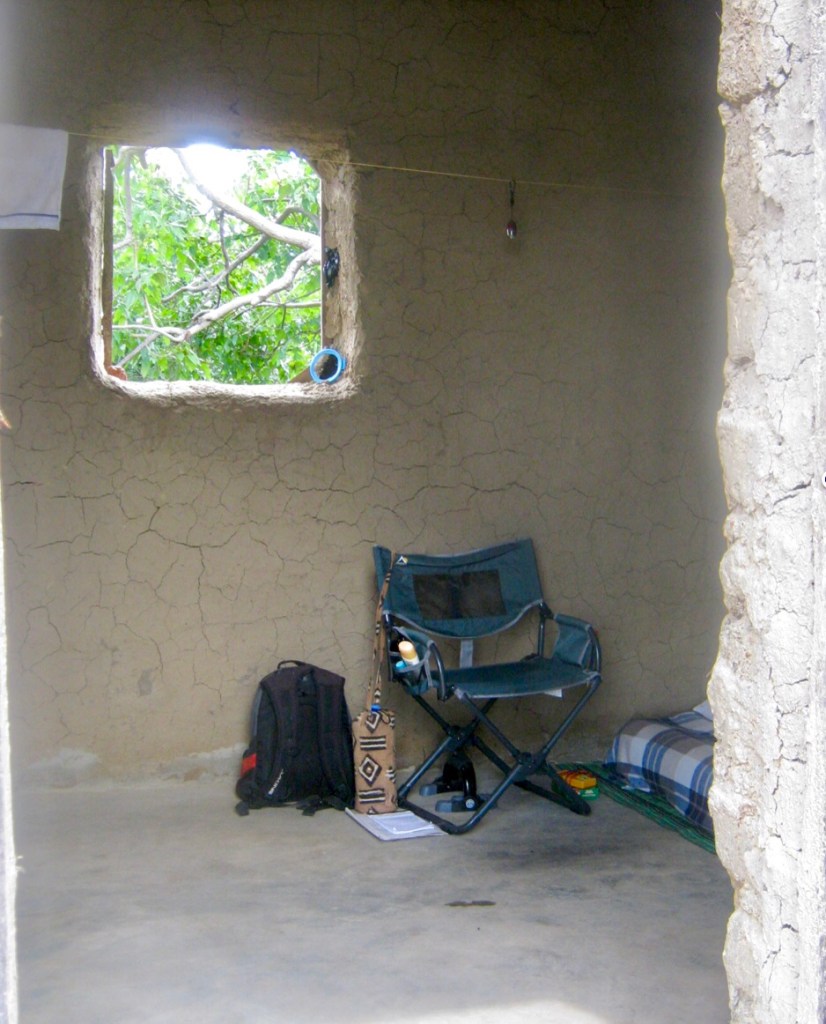
As I begin to write, there is a Fulani shepherd boy sitting just outside my door, enjoying the shade and playing with a small toy, while the flock of sheep he looks after are grazing within view. Hoards of flies are buzzing noisily in and out of my mud-brick room, but thankfully they’re leaving me alone (mostly). The door is propped open to let in the breeze. A screened door or window is not really an option at this point, given the very rough mud-brick and daub construction. I’m just thankful to have a door I can close at night – especially given the fact that one of the herdsmen killed a large cobra two nights ago, just behind my room!
A rainy season day in Koyala
I’ve been back in the village with the team nearly two weeks, and I have to say its been a challenging time so far! Just getting here was difficult and took the better part of two days instead of the usual 6 hours or so. With me were team members Noé, his wife Rebecca and 11 month-old Grace (she really is aptly named – she was smiling and cheerful the entire time). The rains have been extreme with lots of flooding. About 20 miles from Koyala, we came to a severely flooded area that everyone assured us we could never cross, even with the 4-wheel drive. There was an assorted crowd there discussing what to do – people on motorbikes, donkey-carts, and a truck full of merchandise. In the end, we had to turn back, find higher ground and spend the night in the vehicle. Dinner was a watermelon we had bought along the way. It was a sweaty, uncomfortable and mosquito-ridden night, the likes of which I never want to repeat… (ever).
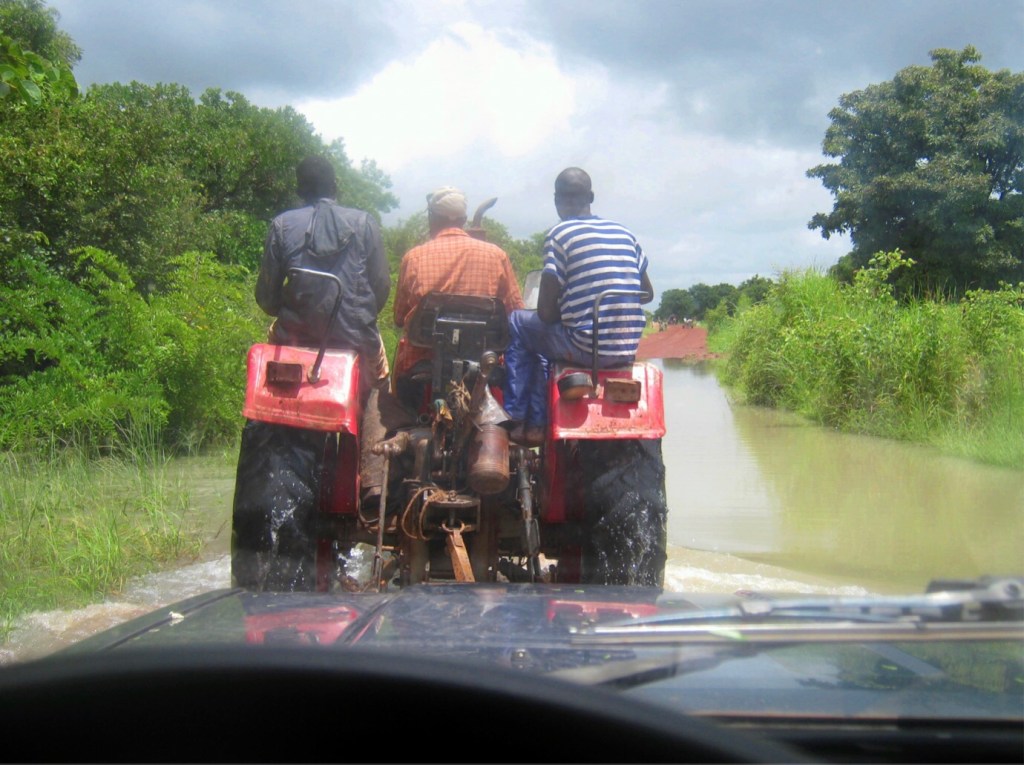
The next morning, my coworker Samuel Sangaré arrived from another village and arranged for a large farm tractor to pull our vehicle across the flooded area (it was a bit unnerving to see water rushing in under the doors!) After crossing, we made the last 20 kilometers or so in driving rain and arrived safe and sound at our little base, to enjoy a hearty lunch. It’s amazing how good simple food tastes when you’ve had next to nothing to eat for a day and half!
Being towed through deep water.
Two things we weren’t able to do before the rains came in early June: 1) Dig and enclose a proper toilet. 2) Install a fence or wall around the property to keep the cows, goats and sheep out. No toilet means you have to wander a ways out into the brush and find a leafy clump of trees to do your business. Not nice, but not so bad if you’re well and it’s not 2 a.m. No fence means cow dung all over the place and thick clouds of flies – including some vicious biting flies – harassing man and beast from sun-up to sun-down. Arms and legs become a mass of insect bites. Mine swelled hugely, itched unmercifully, and the bumps turned into sores…
My luxury lodgings in those early days
Up to this point I was fine. The toilet will be dug, a fence will eventually be installed, so what’s a little temporary discomfort for the sake of the Gospel? No big deal, right? Right. Until the malaria hit and my attitude turned as sour as my stomach…
You may have noticed that I started writing this letter on September 27. The next morning, I woke up feeling a bit weak, and joined the team for our usual 7 a.m. prayer time. Mid-meeting, I had to bolt from my chair and ended up behind the house, doubled over and retching loudly. A few more minutes and I was burning with fever and aching everywhere – a nice bout of malaria!
As I lay in my room looking at the mud walls, trying to ignore the racket of a gazillion buzzing flies (which kept trying to investigate my nostrils) all while the fever mounted, I was racked with doubts. I wallowed in self-pity; I got really angry. “What am I doing out here!? I must be an idiot. I’m too old for this, where are the young men who should be doing this? I hate this place – I’m getting out and I don’t ever want to see it again! There’s got to be someone else who can do it….”
The team prayed for my recovery. I just prayed not to barf one moment to the next. Five days later I had just enough strength to drive out with our team leader Sassamba (the floodwaters had gone down enough that we didn’t need a farm tractor to do it.) We spent two days at the home of my coworker Samuel before continuing to home base in Koutiala. He coaxed me to eat, we talked lots of business, I rested – and the Lord spoke to me…
I wasn’t angry anymore, but I was still quietly consoling myself with thoughts of getting out of this business… I awoke in the early hours and decided to pick up where I’d left off reading in John chapter 10. “The hired hand is not the shepherd and does not own the sheep. So when he sees the wolf coming, he abandons the sheep and runs away. Then the wolf attacks the flock and scatters it… I have other sheep not of this sheep pen, I must bring them also.”
I didn’t want to read anymore, but it was too late. I understood perfectly: “No Lord, I don’t want to be a hired hand. No, I’m not going to run away and abandon the team. Yes, I’ll go back… But can we leave it for a few more days until I feel better?”
So what happened? I got better, I took some rest and recovery time, and I went back – over and over again for the next seven years. And it wasn’t the only time I thought about quitting. I find that often, things that are a great privilege, a great opportunity, are also the hard things that challenge our commitment and loyalty. ‘Grit’ is the old-fashioned word for taking our courage in hand and continuing to show up when we feel like running away. And when we keep showing up for the people and the mission God has entrusted to us, our capacity to love, to endure, and to trust the One who called us will only increase.
DIY – ‘Do It Yourself’ – has become a hallmark of American life and culture. It’s a phenomenon which I suppose has its roots in our history of rugged, independent pioneers who had to be self-reliant and figure things out. But I can’t help but believe that as those small, newly planted communities were formed, people also pitched in to help one another. Absolute independence is a myth – but it’s a myth that we love, telling the story of how we pulled ourselves up by our own bootstraps. In our modern times, this has produced a supposedly streamlined, more efficient model of self-service in just about every facet of life. From pumping your own gas to building your own burger online, to self-checkout at the supermarket, the hardware store, the local Walmart, and even self check-in at the airport (including tagging your own bags and lugging them to the conveyor belt), we seem to love the ‘do-it-yourself’ model. We don’t have to wait for assistance, don’t need to waste time on human interaction, and we can just get on our independent way. I admit, I can be as impatient to get on with things as the next person, but sometimes – especially as I get older – I don’t want to be left to fend for myself. A little help would be nice, including the human interaction that goes with it.
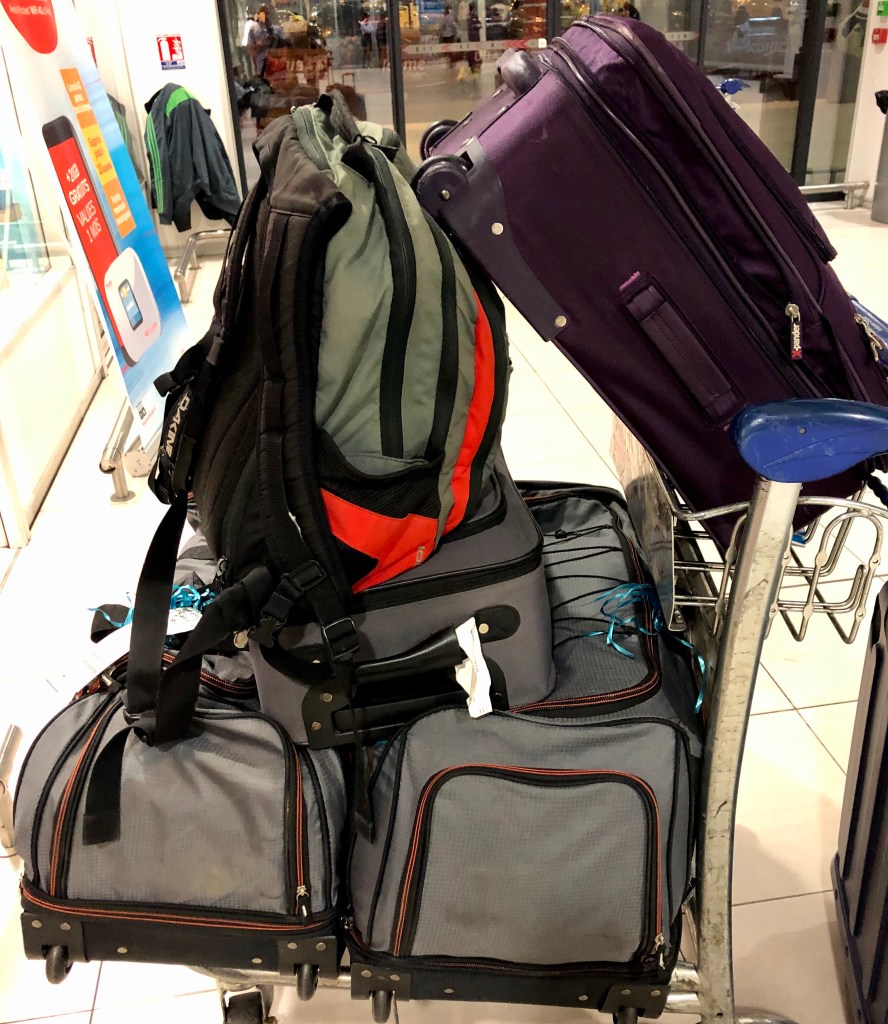
What got me thinking about this was a recent trip to Africa. I was traveling alone and I had six large bags to manage, all at their weight limit. Let me recount the experience… When I arrived at the car rental location to drop off my rented vehicle, I was promptly informed by an Avis employee that they were not allowed to help me with my bags. I was permitted to pull the car up near the shuttle bus stop, so I could unload the bags in a pile and then return the car to a parking spot… then run back to the shuttle bus area to begin dragging all six bags onto the bus that would take me to the airport. The bus driver did help me getting the bags onto the bus, both of us working as fast as we could since it was obvious the other passengers were annoyed at the slight delay. This kind man also pitched in to help me unload the bags at the airport entrance. I tipped him generously. And that was the extent of any help I was going to get. I piled the bags up on the sidewalk in front of the busy terminal, trying to get my bearings and figure out what to do next.
It was obvious that the only thing I could do was leave all the bags outside, unattended, while I hurried into the airport to find some baggage carts. I found an information desk and explained to the bored-looking man sitting behind it that I had a large pile of luggage I needed to bring into the airport for check-in. Barely looking up from his phone, he waved a hand. “Carts are over there.” That was the end of the conversation. I raced ‘over there’, swiped my credit card to pay, and grabbed two carts. I dragged them outside, loaded each with three bags and proceeded to pilot the them into the terminal while people just stared. Then it was onto an elevator to get to departures, and finally to check-in. Not a single airport or airline employee to lend a hand. Here’s the thing: I don’t expect to be pampered or treated like royalty, but I’m 63 years old, I’ve lost over two inches of height over the last few years from degenerating discs in my back and neck, and this was a perfect scenario to do more damage. I work out and lift weights regularly to keep myself as strong and as injury-proof as possible, but jeez! All I’m saying is, little help would have been nice.
Getting those bags checked in and on their way to their final destination was a tremendous relief. Why? Because I knew that on the other end, in Cotonou, Benin, things would be more civilized. There would be HELP. I knew I wouldn’t be dragging those six heavy bags off the carousel and onto a luggage cart by myself while people just stared. I passed easily through immigration and out into the baggage claim area. All I had to do was motion to one of several baggage handlers who, for a small fee, would be glad to take care of things. I explained to him that all six bags had bright blue ribbon tied to their handles so we could recognize them easily. The rest was a piece of cake. We found my friend Timothée waiting for us with his car. Bags were loaded and we were off to the hotel. This is a small, family-owned hotel, not terribly fancy, but comfortable, and we get a special rate because our group is there so often. As I reached for one of the bags, the young lady at the front desk quickly put out her hand. “Oh no, monsieur, leave it, please. We will bring everything to your room.” I was immediately struck with the huge difference between my own American culture and the way things work in West Africa.
When I worked in a village in rural Mali, there was a common saying that encapsulated a whole philosophy of community life: ‘An be nyongon fe.’ We are together. It’s a simple statement of solidarity, often quoted when someone pitches in to help another person in any number of ways. For instance, if I was walking up the path to our base, maybe carrying several bags of purchases from the little local market, and someone happened along the same path, they would almost without thinking reach out to take a few things off my hands and help me carry the load the rest of the way. Why? Just because we all need a hand now and then and we’re part of the same community.
Helping hands in the village
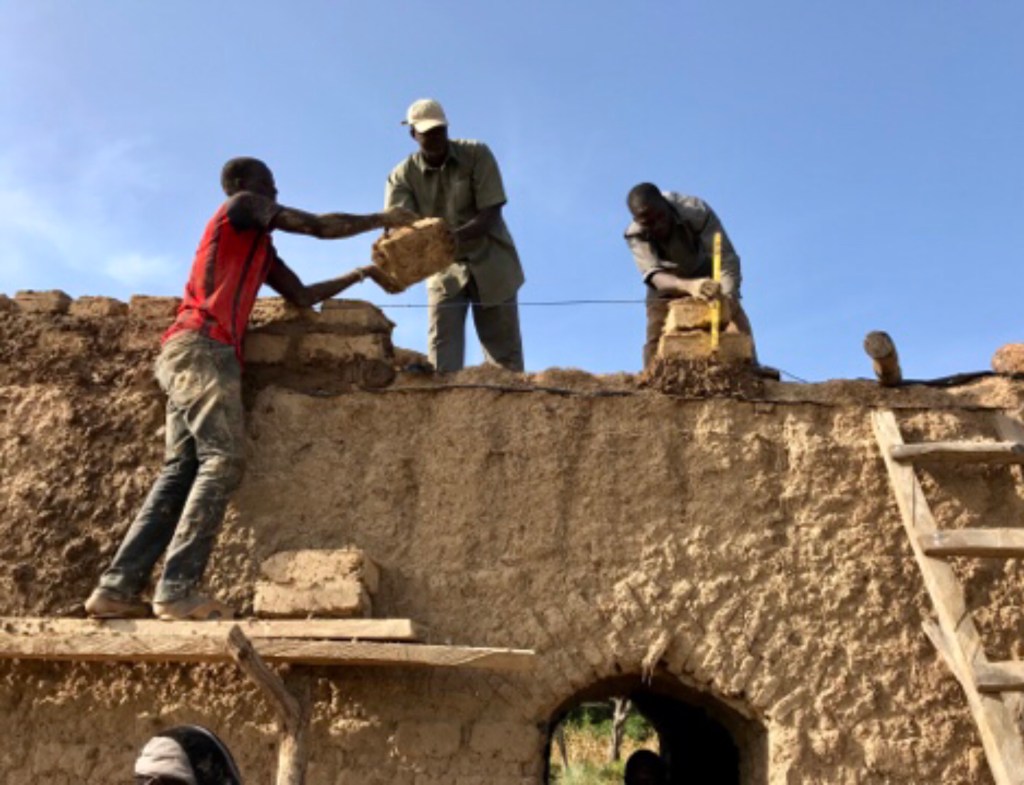
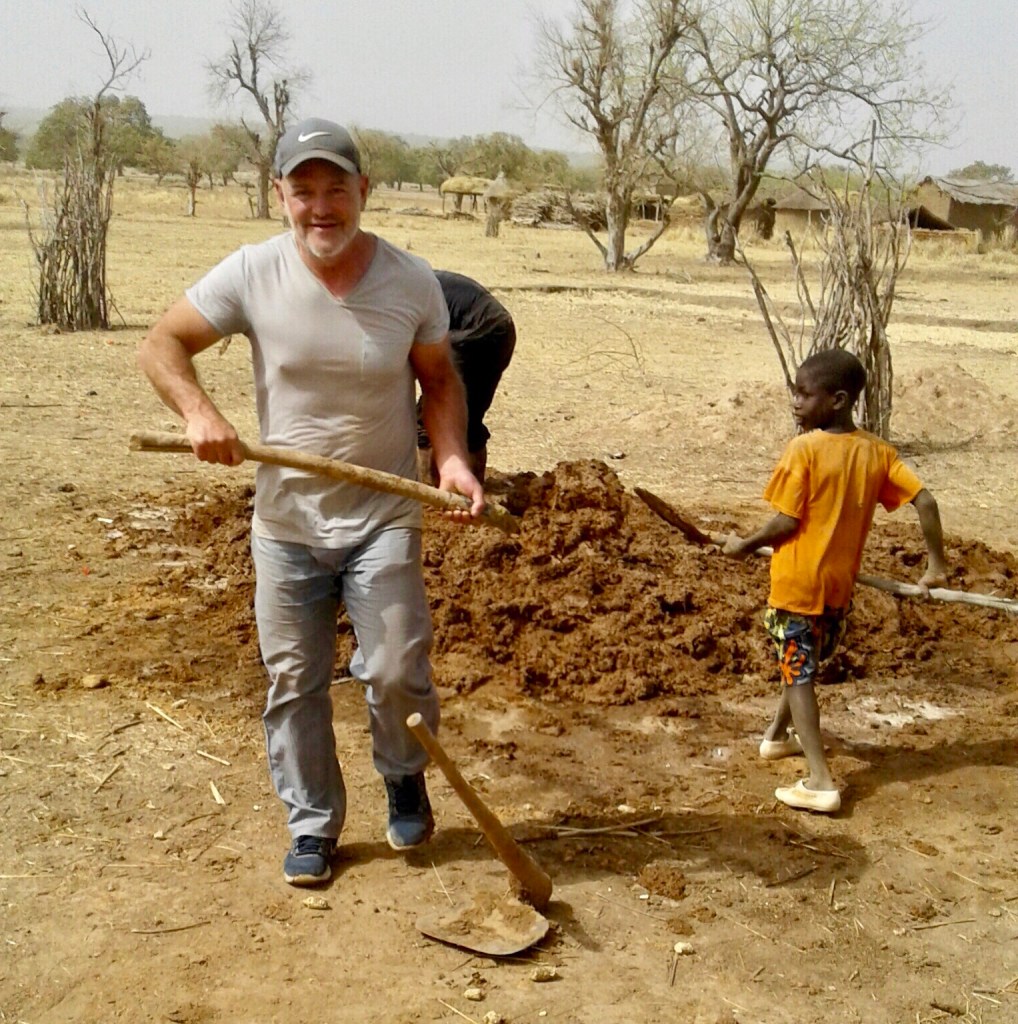
If you happen to pass by a field where a family is harvesting their rice, the traditional and quite obvious thing to do, is to enter the field, take the sickle from someone’s hand and pitch in. Or if you pass by a construction project where mud is being mixed and bricks are being laid, you would as a matter of course pause your errand and help carry bricks or mix the mud, for maybe a half-hour. Why? Just to say, ‘we’re together, we support one another.’ But it’s not my field, it’s not my house! Why should I take my time? Because another day you will be harvesting a field or building a house, and others will pitch in to help you. In that hard, rural life, it takes the community working together and taking care of one another to survive. We’re in this together! The concept of ‘Do-It-Yourself’ is unthinkable in that context.
Pitching in as a new house is being built.
The reality is that in any context, life is hard. It’s challenging, and we could all use a little help here and there, right? To recognize another’s humanity and worth, simply by taking a few minutes to lend a hand, to help someone carry their load for some portion of the path – who knows how much good it could do? How much encouragement you might give to another struggling soul at just the right moment! As followers of Jesus, we are called to do good, and it doesn’t need to be complicated.
Earlier this week I set off on another trip to Africa. When I dropped off the rental car – at a different airport than last time – one of the Avis employees saw my pile of baggage and exclaimed, ‘Wait right there, I can run and get you a luggage cart someone left here.” I responded with an enthusiastic ‘God bless you!’ She ran off, came back in a few minutes with the cart, and another attendant helped me get the bags settled onto it. I cannot put into words what this did, not only for my 63 year old back, but for my attitude and mood! After loads of stress the day before as I was preparing for this trip, I felt the load lifted and my soul encouraged. It was like a kindness from the Lord himself. And that’s how His kindness most often touches our lives, right? Through human hands that help us carry the load. Simple encounters like this remind us that we are seen, we are loved, we are not alone in this world, and that life was never meant to be a do-it-yourself project.
I’ve heard lots of advice over the years about the importance of making a 5-year or even 10-year plan for one’s life: ask yourself where you want to be in 5 years, envision it, and let that vision guide your goal-setting and decisions. I think it’s a great thing, even though I’ve never actually done that. But I have said YES to Jesus, I’ve attempted to follow Him (however imperfectly), and I’ve walked through the open doors in front of me. Along that path, I’ve found myself doing things I never envisioned myself doing, in places I never imagined I’d be, and I’m all the richer for it. Life has been hard at times, but it’s definitely been good!
Teaching some YWAM students in a village in Mali, The shade of a big mango tree is our classroom
I’ve been looking back over some old newsletters and journals, and I thought I’d share one of those ‘I-never-saw-myself-doing-that’ moments. Here’s one from 2016:
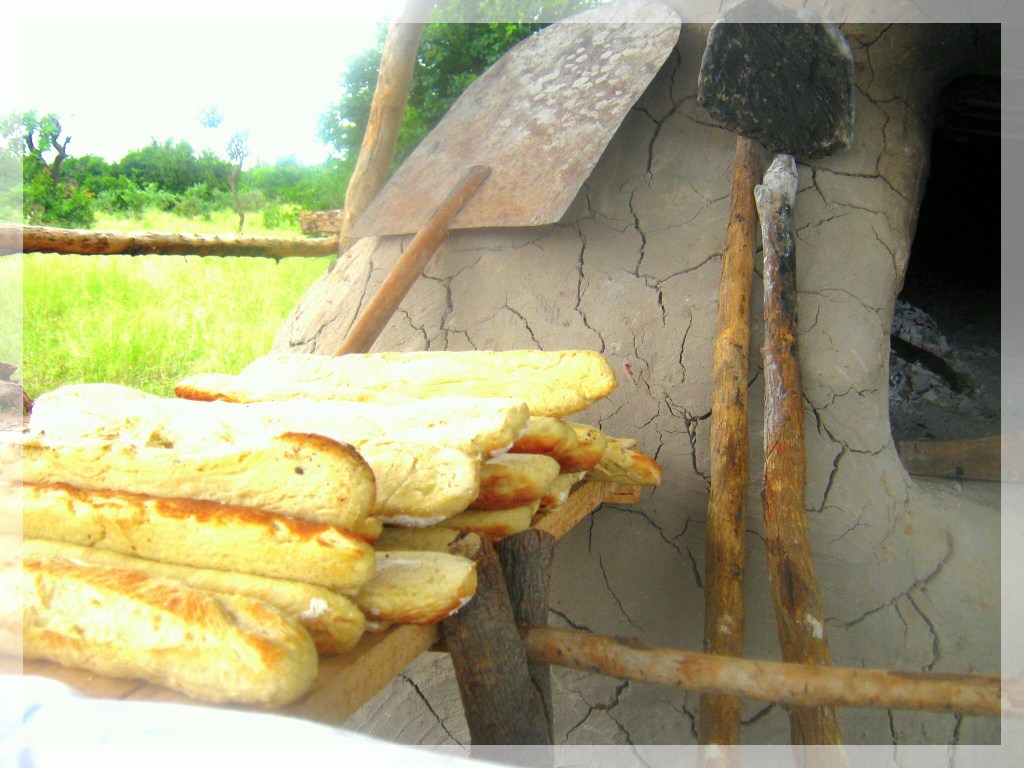
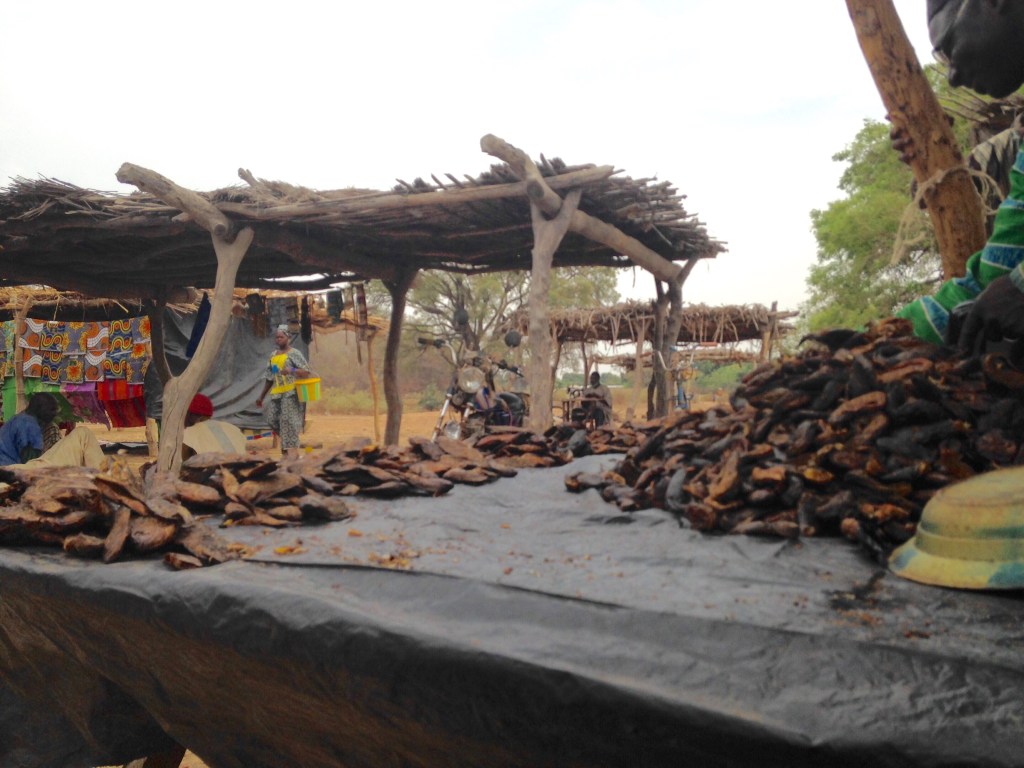
A fifty-seven year old, short, bald, American guy is sitting on a makeshift bench in a dusty market in a rural Malian village, next to the dried fish vendor with his plies of blackened, dried catfish, in 107-degree heat, selling bread and feeling slightly ridiculous. Why, for crying out loud!? As bizarre as this scenario sounds, the bread needed to be sold, and I was available. Kassim (who had baked it for market day as usual) was in another village with a well-drilling team. Sometimes you just do what’s in front of you without analyzing too much (our 100 loaves did sell out in 15 minutes, and I got some good language practice into the bargain). Bizarre on one hand, mundane on the other, but from the perspective of our guiding principle – the Word became flesh and lived among us – it was the most sensible thing to do.
Bread fresh out of the traditional mud-brick oven
As a child, I didn’t have plans – just lots of daydreams. I used to imagine myself having extraordinary adventures and doing amazing things – but I had little confidence and doubted I would get very far. As an older adult, I’ve come to realize that I don’t need to be extraordinary (and it’s better if I don’t try since that’s not really the point). One thing holds true for all of us: Whatever our confidence level, whatever we think of our abilities or lack thereof, we simply need to be willing and available. Then the God who alone works wonders can do wonderful things with us, whenever and however He chooses, while we get the joy of participating if we will only say ‘YES.’ I sometimes feel like one of those guys standing around in Jesus’ parable of the day-laborers (Matthew chapter 20:3-4). “He [the Master] saw others standing idle in the marketplace, and he said to them, you go into the vineyard too, and whatever is right I will give you.” There was a time in my life, way back when, when I was going nowhere fast. Then I got invited into the Master’s vineyard. I like it in here, and I trust Him to give me ‘whatever is right.’ Some days are long and tedious, and then some days are flat-out amazing – you never know! So I just keep reporting for duty.
The dried fish vendor’s table in the Tuesday market in Koyala, Mali.
Today I’m not in a dusty Malian village, I’m in the bustling city of Lubumbashi, in the Democratic Republic of Congo. I’m here to do some training and coaching with our Operation Christmas Child volunteers. (It’s a treat being here because I still speak one of the local languages from having lived in DRC way back when, and it brings me just a little closer to people). But just getting here was a test of endurance, and yesterday was a full day of training with some awesome people who love Jesus and who live to share the Gospel. What a privilege to serve them! Today has been a sweet day of rest and reflection – and the plan for tomorrow? I’ll just show up for another day in the Master’s vineyard, trusting in His generosity and knowing that whatever is right, He will give me.
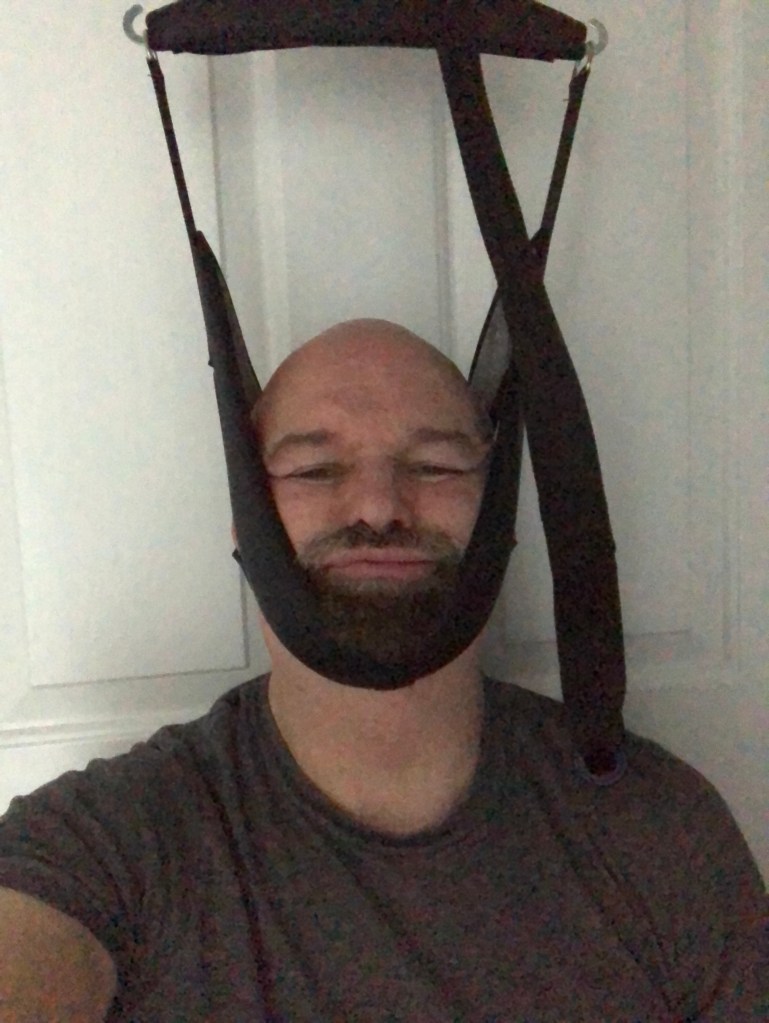
Don’t worry, it’s fine! Just a little home traction session.
The past two months have been a difficult stretch. I was just feeling back to normal after my April chemo session, when I started to come down with a cold. It turned into a rotten thing that put me out of commission for a week, shut down our planned Easter celebration, and left me dragging for another few weeks. Before I really got on top of that, I had a shingles outbreak that was really painful, and at the same time I started to have severe neck pain that wouldn’t quit and that made getting through work days a test of endurance. The oncologist sent me for an x-Ray and an MRI. (He wanted to rule out any metastatic disease). No cancer in my neck … but there is a list of things wrong with it – bone spurs, flattened discs, bulging discs etc.
I really work at trying to keep myself in shape, strong, and mobile as possible, but this made me feel like giving up. The problem is, if you let yourself sink into a pit – physically and / or emotionally – it will just be that much harder to climb out and get back on track, and you WILL have to climb out eventually. So it’s best to avoid going there in the first place.
I decided instead to find some exercises I could do to strengthen the erector muscles in my neck, along with some traction I could do at home, and it has helped! Way less pain, I’m feeling more functional again, and I’m thankful for that!
Then just this week, I experienced a disappointment that has hit me way harder than I imagined it would. No one has wronged me in any way. There has been no injustice. I simply didn’t get the promotion I allowed myself to hope for. The news was delivered with kindness and lots of affirmation. But they picked someone else. I said I wanted God’s will – whatever that was. So I have to trust Him with this outcome. But dang, I feel devalued, dumb, less-than, worth less than if I had never ventured in the first place. So now I have an opportunity to not simply get through this, but to grow through it. Maybe all the physical challenges of the past months have worn me down and made me more fragile than I was. I like to think of myself as resilient more than fragile – and resilience is an essential quality to develop as we move through life’s challenges. But I think all of us are fragile in ways we don’t even realize, until the pressure of some event or circumstance reveals the fault lines. But as in most trials, there is opportunity in it.
There is the opportunity of honest self-assessment and humility – and with that comes God’s grace. There is the opportunity to remember, or learn in an even deeper way, that my eternal worth is not derived from a particular role I play or position I fill, but from my identity as God’s child and that relationship I have with Him. Hebrews chapter 2 tells us that because Jesus shared in our humanity, “He is not ashamed to call us brothers and sisters.” If He is not ashamed of me, then I don’t need to be ashamed of myself. And one other thing:
We Christians love to talk about the ‘privilege’ of serving others – until we actually have to do it, until we are actually treated like servants! It’s easy enough to be gracious when we find ourselves in a position of power or authority, and to embrace ‘servant leadership,’ (or at least to throw around the phrase). But what about serving willingly, joyfully, when we are actually in the servant role, playing second fiddle instead of running the show? So, I have yet another opportunity to actually do what Jesus said, and honestly, this is something to look forward to.
Woman carrying a water jar in Koyala, Mali
In the intensely practical New Testament letter of James, the author tells us to consider it all joy when we encounter trials of various kinds, precisely because of the opportunities those hardships present. At 63 years old, I still have room – and opportunity – to grow. I think I’ll take that as a gift and run with it, even if I sometimes groan in the process.




 Know This Love