I never know how to answer, not honestly anyway. I don’t have words that could adequately convey how it was, what it was. Was it good? Well, some of it was horrible and there were also beautiful moments. If I could explain, it still wouldn’t make sense because you had to be there, and it’s not your fault. So, it was OK. Will that do?
I don’t know how to connect these two disparate, entirely dissimilar worlds in any way that could make sense.
A desperate mother comes to the field hospital with her four month old baby. She has been trying to keep him alive on a mixture of flour and water, because her milk dried up weeks ago, and she has no money, no resources left, and three other children she is trying to feed somehow. She is staying at an IDP camp (IDP = Internally Displaced Persons), like so many others who fled the fighting and have lost everything due to Sudan’s civil war. It’s the hot, dry season with temperatures reaching 46 C (115 to 117 F). The baby will likely die, and she has to get back to the other children who have been left on their own. One heartbreaking story among so many other sad stories.
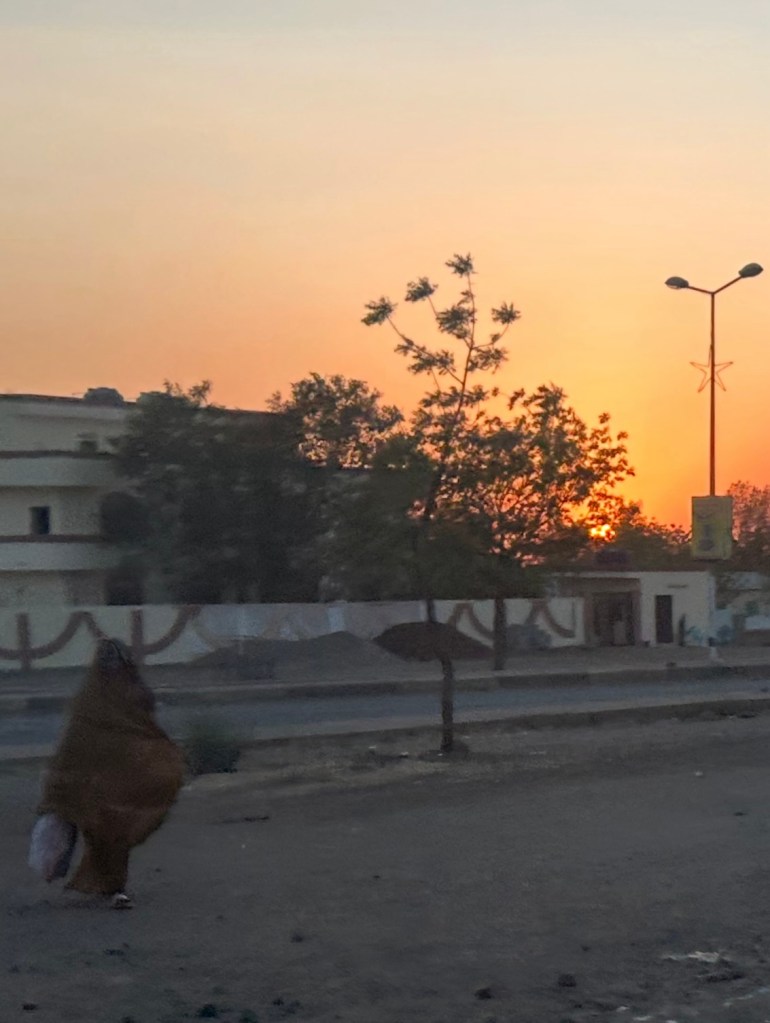
I sat and chatted with Nassim one blisteringly hot day. He’s been working as a janitor, taking out the trash at our temporary hospital. When we wrap things up here, his temporary job will also come to an end. He showed me pictures on his phone of the big, fancy hotel where he used to work in Khartoum, and group photos of his hotel maintenance team – about 20 smiling faces, proud to work in this landmark hotel in Sudan’s capital. Then photos of how it looks now, huge, gaping holes blown in the sides of the once shiny, high-rise building. Then photos of invidual friends and coworkers. “He’s dead.” Scroll. “He’s gone too.” Scroll. “He was also killed.” He stopped at around ten, though I guessed there were more. We talked about loss, grief, and moving forward; hopes for the future. It wasn’t all gloom. Many healthy babies were born to grateful moms. Smiles and jokes even, among staff. Shared evening meals and shared relief that the punishing sun has set and the oppressive heat has lifted. Life will go on, somehow.
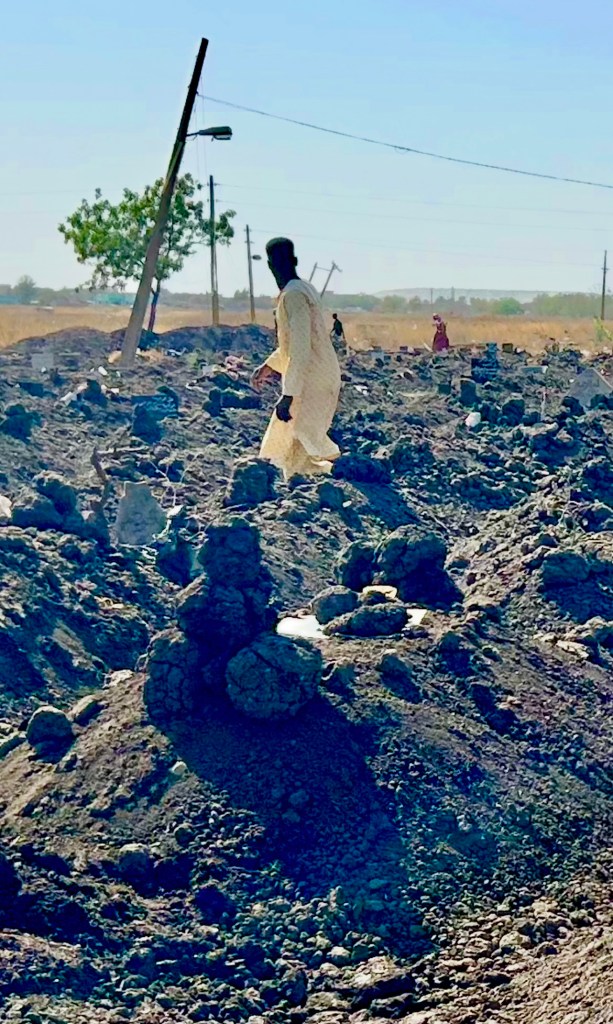
And now I am back in the United States. Enjoying rest, a soft bed, a shower with sufficient water pressure. Springtime rain and green landscapes. The sweet companionship of my wife, the hugs and giggles of grandchildren. Eating at a restaurant. But I’m still in that phase where I’m watching myself do all these common things as if in a dream, from somewhere outside of my body. I’m grateful for the rest, for all these blessings, each thing a privilege and so precious. But I also feel disconnected. How could I have just been there, and now I am here? How can these two different worlds exist on the same planet, in the same universe? And is there any way to connect the two, to bring some sense of continuity between them? I have decided there is not – at least no way that I can see or imagine. The only common denominator between here and there, the one constant, common thread connecting all realms and all times, is the presence of God – the God of all the earth, who can make Himself known in any and every circumstance. “Where can I go from your Spirit? Where can I flee from your presence? If I go up to the heavens, you are there; if I make my bed in the depths, you are there. If I rise on the wings of the dawn, if I settle on the far side of the sea, even there your hand will guide me, your right hand will hold me fast.” (Psalm 139:7-10).
As I follow Jesus, if I end up spending time on the threshold between two worlds, if I find myself living for periods of time in that uncomfortable space where I feel the tension between here and there, between suffering and comfort, poverty and plenty, this world and that, it’s not a bad thing – especially if I find Him present there with me. When Moses found himself on the threshold between the desert and the promised land, looking back, looking ahead, he prayed: “Lord, you have been our dwelling place in all generations.” And He always will be.
 Know This Love