Hast thou no scar?
No hidden scar on foot, or side, or hand?
I hear thee sung as mighty in the land;
I hear them hail thy bright, ascendant star.
Hast thou no scar?
Hast thou no wound?
Yet I was wounded by the archers; spent,
Leaned Me against a tree to die; and rent
By ravening beasts that compassed Me, I swooned.
Hast thou no wound?
No wound? No scar?
Yet, as the Master shall the servant be,
And piercèd are the feet that follow Me.
But thine are whole; can he have followed far
Who has no wound or scar? (Author: Amy Carmichael)
Praise be to the God and Father of our Lord Jesus Christ, the Father of compassion and the God of all comfort, who comforts usi in all our troubles, so that we can comfort those in any trouble with the comfort we ourselves receive from God. 2 Corinthians 1:3-4
A long time ago:

It would take too long to give you the backstory, all the how and why and history that led to this situation – and it would cause your eyes to glaze over with boredom anyway. So I’ll just give you the basic “what.” September 24-25, 1991, Kinshasa, Zaire. An economy in free-fall. (And I don’t mean the price of eggs was high. I mean parents eating every other day so they could maybe feed their children once a day). Unpaid military going on a wild rampage, looting and shooting up most of the city, including our neighborhood. Non-stop gunfire and a night spent on the floor in the hallway with the kids, while bullets bounced off the house. In the morning, a brief calm, which seemed like a good opportunity make a run for it and join some friends on a nearby street. Not because it was any safer, but just for moral support. We grabbed passports and threw a few essentials in backpacks, and hurried there on foot. Just as we began to feel some calm and breathe a sigh of relief, a large, angry mob appeared, intent on looting whatever the soldiers might have passed over.
Glass shattering.
Rocks and chunks of broken cement crashing against the security bars over the windows.
And the the front doors – metal doors also with glass and security bars – being bashed in and wrenched. The sound was sickening.
There was no negotiating with this mob. I tried, and quickly jumped out of the way of a barrage of rocks thrown at my face. We gathered everyone in the small hallway, the adults surrounding the kids. My three little boys were looking up at my face, wide-eyed. I assured them we’d be fine, that the Lord would take care of us. I believed that. But I was also trying to work out in my mind how I could shield my sons and my wonderfully calm wife with my body – all 125 pounds of me – if this crazed mob succeeded in breaking down the doors. They did not succeed, we got out safely, and three days later found ourselves on an evacuation flight straight to Andrews Airforce Base in Maryland, USA.
In the immediate aftermath we thought we were all fine. We’d gotten out with our lives, if not our possessions. We were convinced that God is always good – and it was maybe a point of pride to let everyone see that we were tough, resilient, and that it was all no big deal. We framed it as a great adventure. As my wife would say, “just an occupational hazard.” And it still is. But we were not OK. Aside from the reverse culture shock and disorientation we felt being suddenly back in America, unplanned, we were struggling to manage grief we didn’t know what to do with, grief that no one around us could understand or share. From the point of view of friends and loved ones in America, we were ‘back home’ safe and sound. That’s what mattered and we should be thankful. But the reality was that we had not only left, but had just lost our home, our cherished friends, our ministry – an entire life that we knew and loved, a dream-come-true that we’d hoped would never end. It was gone in a matter of a few days.

Our mission organization didn’t exactly know what to do with us. PTSD counseling wasn’t really a thing in those days, or at least not a thing we knew about. We muddled through, our boys muddled through, and though we all looked good on the outside, it took a while before we were really OK. There was so much kindness extended to us, a church family that welcomed us, loved on us and was patient with us. God provided for our needs in wonderful ways. He had a truly good plan for us, but it took me a while to let go of my own shattered dreams and to be able to accept that new plan. Things turned out better than I could have ever imagined, and I’m eternally grateful.
We did not come through it all unscathed, however. There are scars on our souls that are still sensitive 32 years later, that throb and ache on occasion. We are OK with that. We were in the place God called us to be, doing what He had called us to do, so we have no regrets. But we live with consequences. It hurts to know that our grown sons, who are all fine men of integrity, have struggled with anxiety issues as adults, stemming from that ‘adventure.’ And we are proud that they have all shown great wisdom and courage to seek out help – and as a result have grown tremendously. There is a grace that accompanies these scars, these old aches – a grace and comfort that are expressed in absolute dependence on our good Father, and in empathy and compassion for others. That’s not a bad thing, because through our weakness and vulnerability, the Father shows Himself strong. But in most Christian traditions – and especially American Christianity – we despise weakness and adore the appearance of strength, which so often makes us dishonest, even with our own selves.
American Christianity is afflicted with a triumphalism that is unrealistic and that forces people to live in denial – a theology that insists on complete, perfect healing in the here and now for every grief and loss. I’m a firm believer in divine, miraculous healing, in restoration, in abundant life. I’ve experienced it, and I am experiencing it even now, while I continue to live with some holes in my soul, some pains that may never be healed this side of heaven. That is the testimony of the Apostle Paul as well as many saints through the ages. It is far better, and far more powerful, to live with those ‘thorns in the flesh’, in humble dependence on the God whose grace is sufficient, than to live in proud denial, insisting that everything is ‘fine.’
Resilience is an indispensable quality we must develop, but it cannot be based on our own strength, grit and fierce independence. If it is, we become brittle, hard-hearted, and grace-less toward those around us. I know because I was definitely there at one point! Resilience must be rooted in an unshakable belief in the goodness of God and in a willing dependence on Him – and on those helpers he sends to us.
Therefore, in order to keep me from becoming conceited, I was given a thorn in my flesh, a messenger of Satan, to torment me. Three times I pleaded with the Lord to take it away from me. But he said to me, “My grace is sufficient for you, for my power is made perfect in weakness.” Therefore I will boast all the more gladly about my weaknesses, so that Christ’s power may rest on me. That is why, for Christ’s sake, I delight in weaknesses, in insults, in hardships, in persecutions, in difficulties. For when I am weak, then I am strong. 2 Cor. 12:7-10
To sum up, not every wound will be perfectly healed, every scar erased, every unsatisfied longing filled in this present age. There is a difference between Here-and-Now, and Then-and-There. And in the meantime, in this time, those scars, those holes in our souls with ragged edges, can become portals through which the powerful grace of God flows to us and through us to those around us who need it so much. And that, beloved of the Lord, is a privilege and not a burden, while we hopefully wait for the restoration of all things.
And I heard a loud voice from the throne saying, “Look! God’s dwelling place is now among the people, and he will dwell with them. They will be his people, and God himself will be with them and be their God.‘He will wipe every tear from their eyes. There will be no more death or mourning or crying or pain, for the old order of things has passed away.”He who was seated on the throne said, “I am making everything new!” Then he said, “Write this down, for these words are trustworthy and true.” (Rev. 21:3-5)
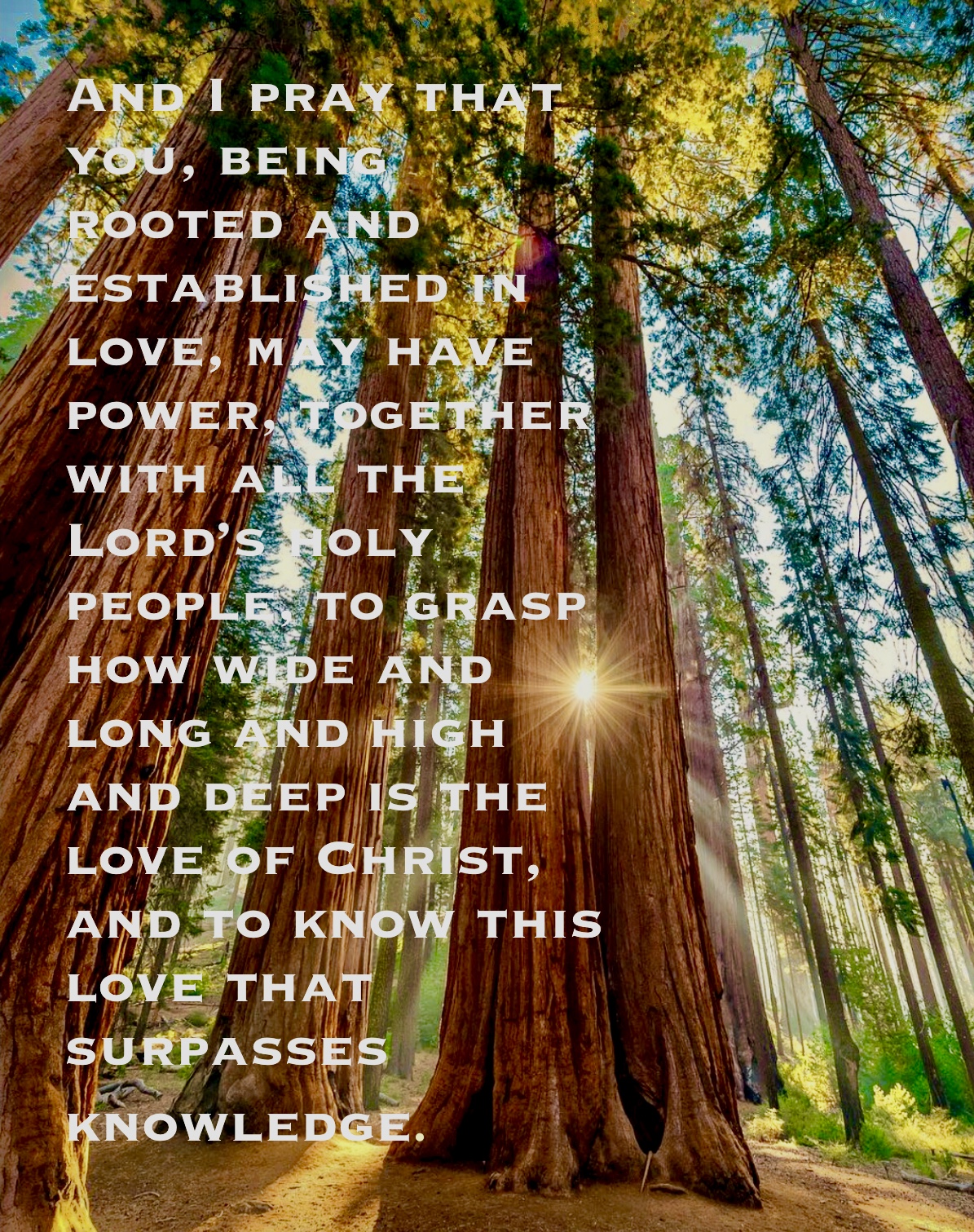
 Know This Love
This is the answer to that age old question of why does God allow pain and suffering to those He loves?
LikeLike
What a powerful testimony my brother.
LikeLike