
DIY – ‘Do It Yourself’ – has become a hallmark of American life and culture. It’s a phenomenon which I suppose has its roots in our history of rugged, independent pioneers who had to be self-reliant and figure things out. But I can’t help but believe that as those small, newly planted communities were formed, people also pitched in to help one another. Absolute independence is a myth – but it’s a myth that we love, telling the story of how we pulled ourselves up by our own bootstraps. In our modern times, this has produced a supposedly streamlined, more efficient model of self-service in just about every facet of life. From pumping your own gas to building your own burger online, to self-checkout at the supermarket, the hardware store, the local Walmart, and even self check-in at the airport (including tagging your own bags and lugging them to the conveyor belt), we seem to love the ‘do-it-yourself’ model. We don’t have to wait for assistance, don’t need to waste time on human interaction, and we can just get on our independent way. I admit, I can be as impatient to get on with things as the next person, but sometimes – especially as I get older – I don’t want to be left to fend for myself. A little help would be nice, including the human interaction that goes with it.
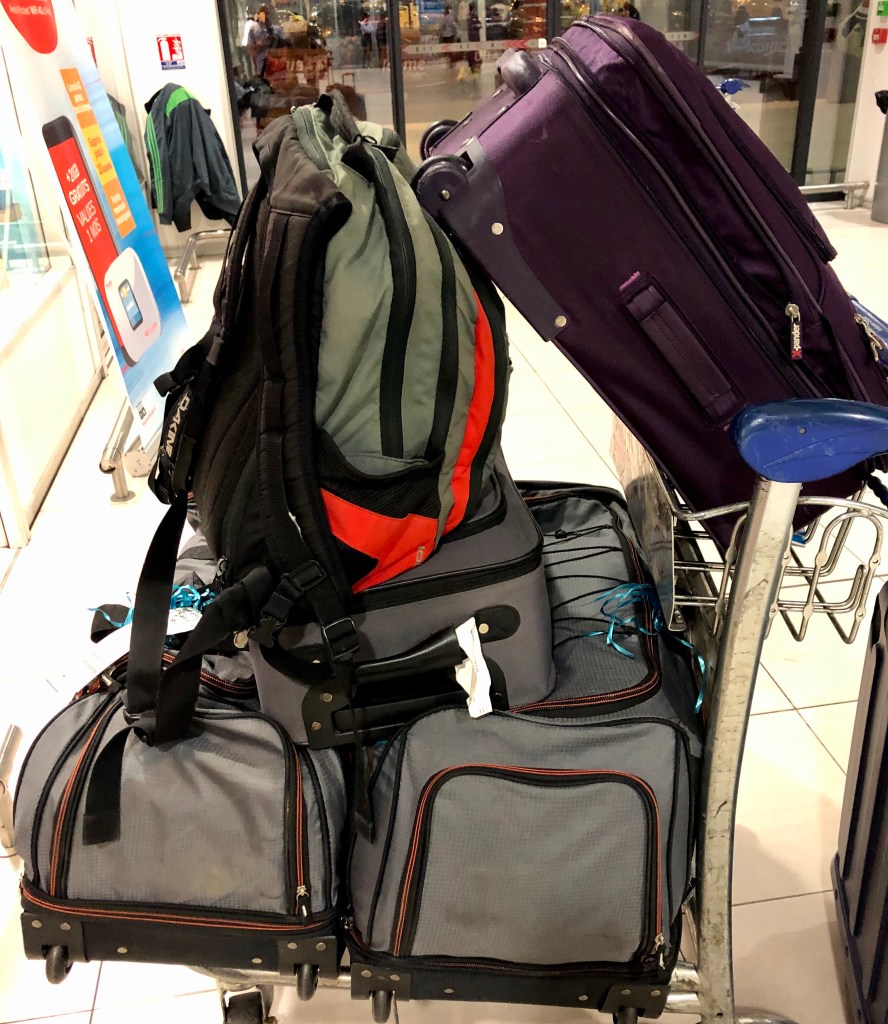
What got me thinking about this was a recent trip to Africa. I was traveling alone and I had six large bags to manage, all at their weight limit. Let me recount the experience… When I arrived at the car rental location to drop off my rented vehicle, I was promptly informed by an Avis employee that they were not allowed to help me with my bags. I was permitted to pull the car up near the shuttle bus stop, so I could unload the bags in a pile and then return the car to a parking spot… then run back to the shuttle bus area to begin dragging all six bags onto the bus that would take me to the airport. The bus driver did help me getting the bags onto the bus, both of us working as fast as we could since it was obvious the other passengers were annoyed at the slight delay. This kind man also pitched in to help me unload the bags at the airport entrance. I tipped him generously. And that was the extent of any help I was going to get. I piled the bags up on the sidewalk in front of the busy terminal, trying to get my bearings and figure out what to do next.
It was obvious that the only thing I could do was leave all the bags outside, unattended, while I hurried into the airport to find some baggage carts. I found an information desk and explained to the bored-looking man sitting behind it that I had a large pile of luggage I needed to bring into the airport for check-in. Barely looking up from his phone, he waved a hand. “Carts are over there.” That was the end of the conversation. I raced ‘over there’, swiped my credit card to pay, and grabbed two carts. I dragged them outside, loaded each with three bags and proceeded to pilot the them into the terminal while people just stared. Then it was onto an elevator to get to departures, and finally to check-in. Not a single airport or airline employee to lend a hand. Here’s the thing: I don’t expect to be pampered or treated like royalty, but I’m 63 years old, I’ve lost over two inches of height over the last few years from degenerating discs in my back and neck, and this was a perfect scenario to do more damage. I work out and lift weights regularly to keep myself as strong and as injury-proof as possible, but jeez! All I’m saying is, little help would have been nice.
Getting those bags checked in and on their way to their final destination was a tremendous relief. Why? Because I knew that on the other end, in Cotonou, Benin, things would be more civilized. There would be HELP. I knew I wouldn’t be dragging those six heavy bags off the carousel and onto a luggage cart by myself while people just stared. I passed easily through immigration and out into the baggage claim area. All I had to do was motion to one of several baggage handlers who, for a small fee, would be glad to take care of things. I explained to him that all six bags had bright blue ribbon tied to their handles so we could recognize them easily. The rest was a piece of cake. We found my friend Timothée waiting for us with his car. Bags were loaded and we were off to the hotel. This is a small, family-owned hotel, not terribly fancy, but comfortable, and we get a special rate because our group is there so often. As I reached for one of the bags, the young lady at the front desk quickly put out her hand. “Oh no, monsieur, leave it, please. We will bring everything to your room.” I was immediately struck with the huge difference between my own American culture and the way things work in West Africa.
When I worked in a village in rural Mali, there was a common saying that encapsulated a whole philosophy of community life: ‘An be nyongon fe.’ We are together. It’s a simple statement of solidarity, often quoted when someone pitches in to help another person in any number of ways. For instance, if I was walking up the path to our base, maybe carrying several bags of purchases from the little local market, and someone happened along the same path, they would almost without thinking reach out to take a few things off my hands and help me carry the load the rest of the way. Why? Just because we all need a hand now and then and we’re part of the same community.
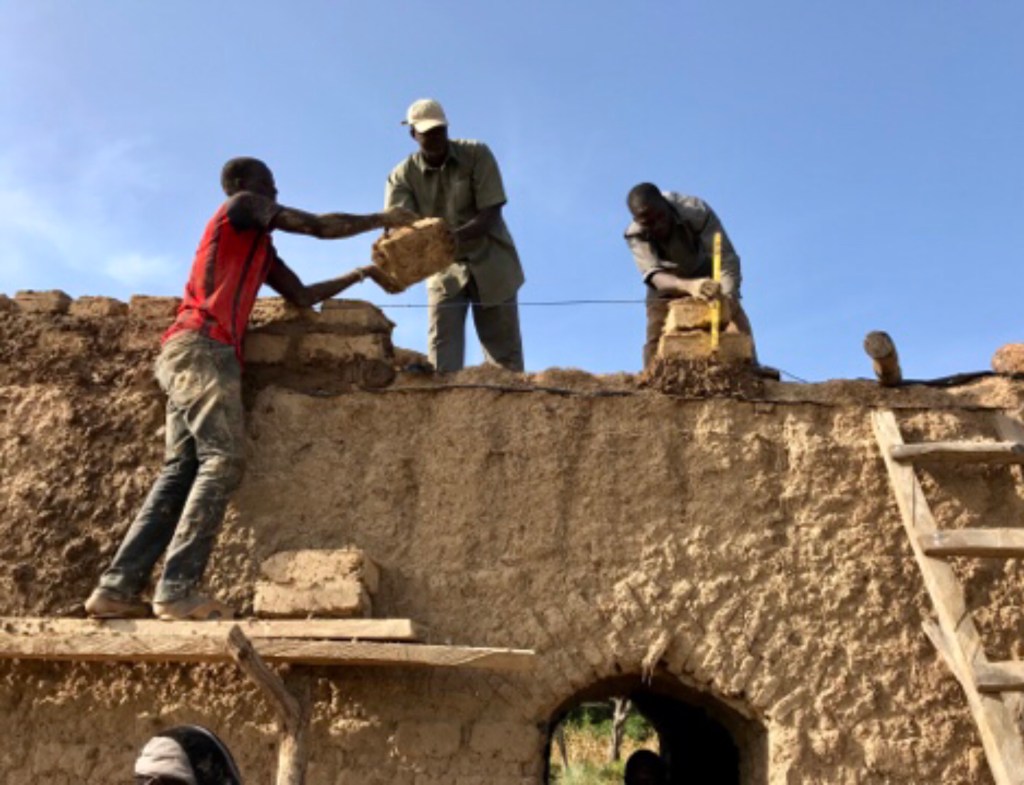
If you happen to pass by a field where a family is harvesting their rice, the traditional and quite obvious thing to do, is to enter the field, take the sickle from someone’s hand and pitch in. Or if you pass by a construction project where mud is being mixed and bricks are being laid, you would as a matter of course pause your errand and help carry bricks or mix the mud, for maybe a half-hour. Why? Just to say, ‘we’re together, we support one another.’ But it’s not my field, it’s not my house! Why should I take my time? Because another day you will be harvesting a field or building a house, and others will pitch in to help you. In that hard, rural life, it takes the community working together and taking care of one another to survive. We’re in this together! The concept of ‘Do-It-Yourself’ is unthinkable in that context.
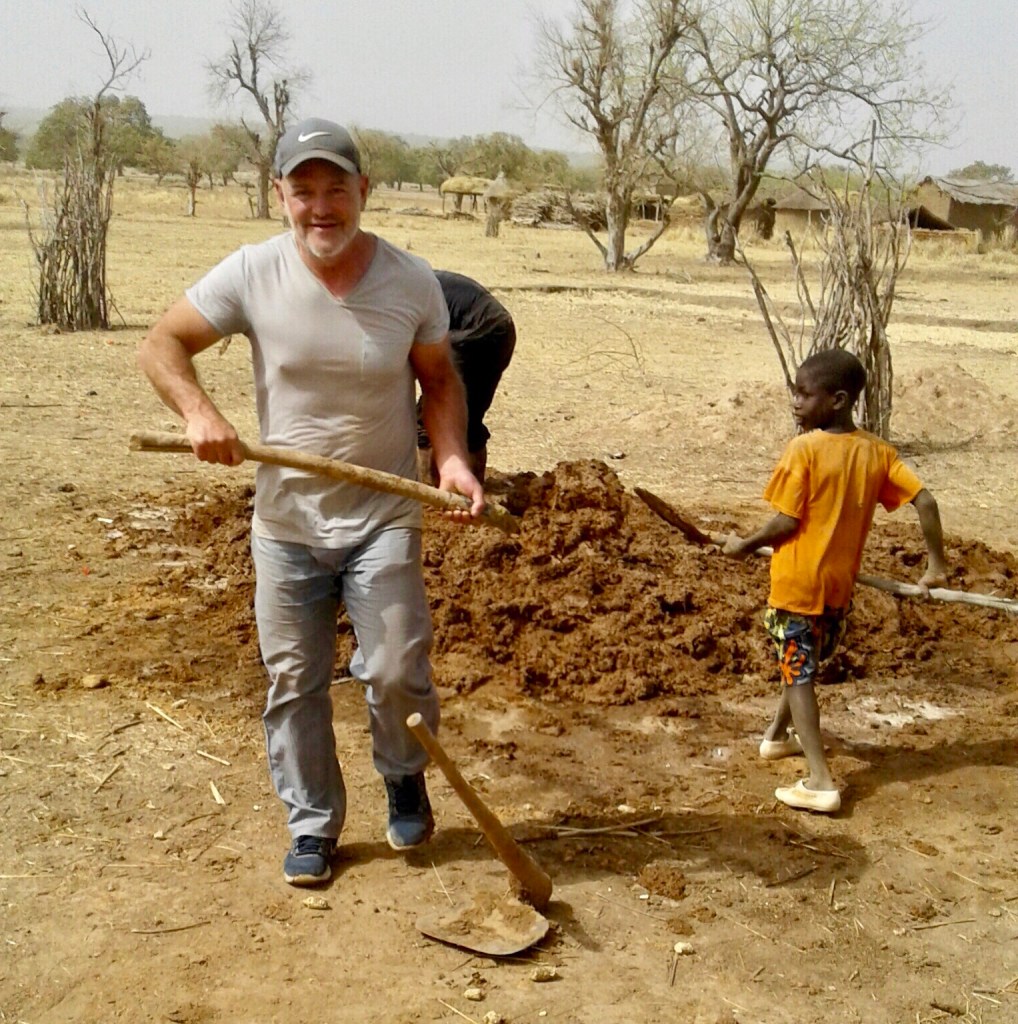
The reality is that in any context, life is hard. It’s challenging, and we could all use a little help here and there, right? To recognize another’s humanity and worth, simply by taking a few minutes to lend a hand, to help someone carry their load for some portion of the path – who knows how much good it could do? How much encouragement you might give to another struggling soul at just the right moment! As followers of Jesus, we are called to do good, and it doesn’t need to be complicated.
Earlier this week I set off on another trip to Africa. When I dropped off the rental car – at a different airport than last time – one of the Avis employees saw my pile of baggage and exclaimed, ‘Wait right there, I can run and get you a luggage cart someone left here.” I responded with an enthusiastic ‘God bless you!’ She ran off, came back in a few minutes with the cart, and another attendant helped me get the bags settled onto it. I cannot put into words what this did, not only for my 63 year old back, but for my attitude and mood! After loads of stress the day before as I was preparing for this trip, I felt the load lifted and my soul encouraged. It was like a kindness from the Lord himself. And that’s how His kindness most often touches our lives, right? Through human hands that help us carry the load. Simple encounters like this remind us that we are seen, we are loved, we are not alone in this world, and that life was never meant to be a do-it-yourself project.
 Know This Love